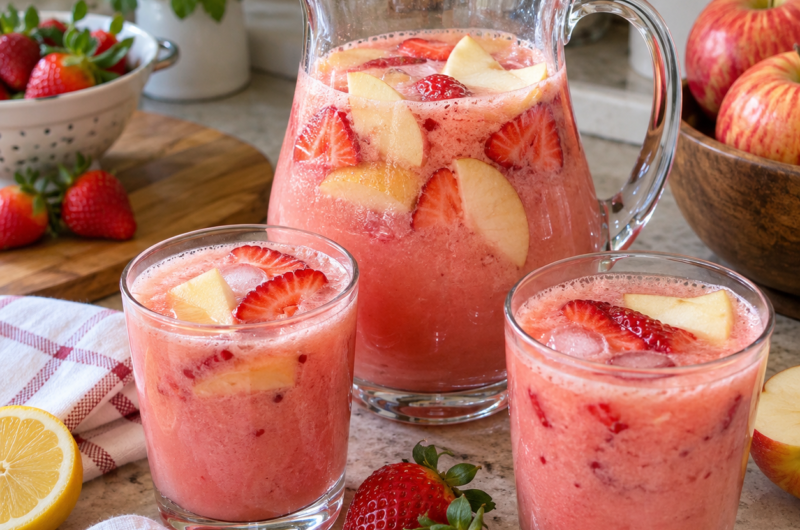
Refreshing Strawberry Apple Juice is a simple homemade fruit drink that combines sweet strawberries, crisp apples, fresh lemon juice, and cold water. The result is a colorful, naturally fruity beverage with a pleasant balance of sweet and slightly tart flavors. With only a few basic ingredients and no cooking required, this easy strawberry apple juice recipe can be prepared quickly for breakfast, brunch, summer gatherings, picnics, or an afternoon refreshment.
One of the biggest advantages of homemade strawberry apple juice is its simplicity. You do not need complicated equipment or advanced kitchen skills. A regular blender is enough to turn the fresh fruit into a smooth drink, while a fine-mesh strainer or cheesecloth can be used when you prefer a lighter, pulp-free consistency. The complete preparation takes only about ten minutes, making this an excellent option when you want fresh fruit juice without spending much time in the kitchen.
Why Make Strawberry Apple Juice at Home?
Homemade fruit juice gives you greater control over what goes into your glass. This strawberry and apple juice uses fresh fruit as its main ingredient, with lemon juice providing additional brightness. Honey or agave syrup is optional, so you can decide whether the natural sweetness of the strawberries and apples is enough. Choosing ripe, flavorful fruit can often reduce the need for additional sweetener.
The combination of strawberries and apples also works particularly well because the fruits have complementary flavors. Strawberries provide a distinctive berry taste and vibrant color, while apples add natural sweetness and a fresh, crisp character. Lemon juice cuts through the sweetness with mild acidity. When everything is blended with cold water, these simple ingredients produce an easy homemade juice that feels refreshing without requiring a long list of ingredients.
A Quick No-Cook Summer Drink
This easy strawberry apple juice is particularly convenient during warmer weather because there is no cooking involved. The fruit simply needs to be washed and prepared before being blended with water and lemon juice. You can serve the drink immediately after blending or refrigerate it for approximately 30 minutes when you want it thoroughly chilled. Ice can also be used when serving if you enjoy an extra-cold fruit drink.
Since the recipe makes four servings, it is practical for small family meals and casual gatherings. It can be prepared for a weekend breakfast, brunch table, garden party, picnic, or children’s refreshment. Its bright red-pink appearance also makes it attractive enough for entertaining without requiring elaborate presentation. A simple clear glass allows the natural color of the strawberry apple juice to become part of the presentation.
Choosing Fresh Strawberries
Strawberries are one of the two main fruits in this recipe, so their quality has a noticeable effect on the finished juice. Look for strawberries with a bright, even red color and a fresh appearance. The recipe requires one cup, or approximately 150 grams, of fresh strawberries. Before using them, wash them thoroughly, remove the leafy tops, and cut each strawberry in half.
Ripe strawberries generally provide better flavor and natural sweetness, which is particularly helpful when you want to minimize or completely skip the optional honey or agave syrup. Avoid berries that are heavily bruised or beginning to spoil. Since strawberries do not stay fresh as long as many apples, it is best to prepare this juice while the berries are still firm, fresh, and flavorful.
Selecting Apples for Fresh Juice
The recipe uses two medium apples, approximately 300 grams in total. Apples provide much of the juice’s natural sweetness and balance the sharper flavor of strawberries and lemon. Crisp, flavorful apples work especially well. The original recipe mentions varieties such as Honeycrisp and Fuji as examples, although the recipe itself simply requires two medium apples.
Wash the apples thoroughly before preparation. Remove the cores and chop the fruit into manageable pieces so the blender can process them efficiently. There is no need to create perfectly uniform pieces because everything will eventually be blended. Smaller chunks, however, are easier for most household blenders to process and can help produce a smoother mixture in less time.
Fresh Lemon Juice for Balanced Flavor
One tablespoon, or 15 ml, of freshly squeezed lemon juice may seem like a small component, but it plays an important role in balancing this strawberry apple drink. Strawberries and apples are naturally sweet, particularly when fully ripe. Lemon juice introduces a fresh acidic note that makes the overall flavor brighter and prevents the finished juice from tasting overly sweet or flat.
Freshly squeezed lemon juice is specified in the original recipe and requires only a small amount. Add it directly to the blender with the prepared strawberries, chopped apples, and cold water. Once blended, taste the juice before adding the optional sweetener. Depending on the natural sweetness of your fruit, you may decide that no additional sweetness is necessary.
Why Cold Water Is Important
The recipe contains two cups, or 480 ml, of cold water. Water helps the blender process the fruit while turning the thick fruit mixture into a drinkable juice. Starting with cold water also makes the beverage more refreshing immediately after blending. If you intend to serve the juice straight away rather than refrigerating it first, using properly chilled water is particularly useful.
The specified amount of water also helps balance the concentration of the strawberries, apples, and lemon. Adding significantly more water would produce a thinner and less flavorful drink, while reducing it could make the mixture closer to a smoothie or fruit puree. Following the original two-cup measurement gives the juice its intended consistency and produces approximately four servings.
Optional Honey or Agave Syrup
The recipe includes two tablespoons, or 30 grams, of honey or agave syrup as an optional ingredient. Whether you need it depends largely on the sweetness of your strawberries and apples and your personal preference. Before adding any sweetener, taste the blended juice. Naturally sweet fruit may provide enough sweetness on its own, allowing you to leave this optional ingredient out.
When additional sweetness is desired, stir in the honey or agave syrup after blending and straining. Mixing it thoroughly ensures the sweetness is evenly distributed throughout the pitcher. Because the original recipe lists honey or agave syrup as optional, leaving it out does not interfere with the basic preparation. This flexibility makes it easier to control the sweetness of each batch.
Blender Method for Homemade Strawberry Apple Juice
A blender is the main piece of equipment required for this recipe. Add the hulled and halved strawberries, cored and chopped apples, fresh lemon juice, and two cups of cold water to the blender. Secure the lid and blend on high speed until the mixture is smooth. Depending on the blender, this should take approximately one to two minutes.
Giving the fruit enough time to blend is important because apples are firmer than strawberries. Check the mixture after blending and make sure there are no large apple pieces remaining. At this stage, the beverage will contain the natural fruit pulp. You can serve it this way for a thicker drink or continue with the optional straining step for a smoother, more juice-like consistency.
Should You Strain Strawberry Apple Juice?
Straining is optional and depends entirely on the texture you prefer. If you enjoy a thicker fruit drink with more pulp, you can serve the blended mixture without straining it. If you prefer smooth homemade juice, place a fine-mesh strainer or cheesecloth over a pitcher or bowl and slowly pour the blended mixture through it.
Allow the liquid to pass through while the larger fruit solids remain behind. Straining creates a lighter and smoother beverage, while leaving the drink unstrained retains more of the fruit pulp. Neither approach changes the basic strawberry apple flavor, so this step can be adjusted according to how you and your family prefer homemade fruit drinks.
How to Get the Best Flavor
The quality and ripeness of the fruit have a major influence on a simple recipe like this one. Since there are only five ingredients, including the optional sweetener, there are few other flavors to hide underripe or poor-quality fruit. Fresh, ripe strawberries and crisp apples therefore provide the strongest foundation for a naturally flavorful glass of homemade strawberry apple juice.
It is also useful to taste the juice after blending but before sweetening. If the strawberries and apples are naturally sweet, honey or agave syrup may not be needed. If the fruit is more tart, the optional sweetener can balance the flavor. This simple tasting step gives you better control while preserving the original ingredient list and preparation method.
Strawberry Apple Juice for Breakfast and Brunch
Fresh strawberry apple juice makes a colorful addition to a breakfast or brunch table. Its fruity flavor pairs naturally with many common morning foods, and because it requires no cooking, it can be prepared while other dishes are being made. Preparing the fruit beforehand can make the process even faster when you have limited time in the morning.
For brunch or entertaining, prepare the juice shortly before guests arrive and keep it refrigerated until serving. Give it a good stir before pouring because some natural separation may occur while it sits. Serve it in clear glasses to highlight its vibrant color. A strawberry or apple slice can be used for presentation without changing the actual juice recipe.
A Refreshing Drink for Summer Gatherings
Cold fruit drinks are particularly appealing at summer parties, picnics, and outdoor meals. This strawberry apple juice offers a simple alternative to commercially prepared beverages and can be made with familiar ingredients available in many supermarkets and fruit markets. Since the recipe makes four servings, quantities can also be prepared in separate batches when serving a larger group.
For the most refreshing result, chill the prepared juice for around 30 minutes before serving. When immediate serving is necessary, starting with cold water and chilled fruit will help. If using ice, add it to individual serving glasses rather than changing the amount of water specified in the recipe itself. This keeps the original recipe proportions consistent.
Understanding the Texture
The texture of homemade strawberry apple juice depends largely on whether it is strained. Directly from the blender, it will be thicker because it contains the blended flesh and pulp of both fruits. This version may feel closer to a light fruit smoothie, although the two cups of water keep it considerably thinner than a typical smoothie.
Straining removes much of that pulp and produces a smoother beverage. A fine-mesh strainer is usually enough for everyday preparation, while cheesecloth can create an even finer result. The choice does not require any ingredient changes. It simply allows you to control the finished texture according to whether you prefer a pulpy fruit drink or a lighter homemade juice.
How to Store Strawberry Apple Juice
Fresh juice generally tastes best soon after preparation, when its flavor and appearance are at their freshest. If you have leftovers, transfer the juice to a clean, airtight container and keep it refrigerated. The source recipe suggests refrigerated storage for approximately two to three days. Stir or shake the juice before serving because natural separation can occur during storage.
For the best drinking experience, prepare only as much as you expect to use within a short period. When making the juice for an event, the strawberries and apples can be washed and prepared ahead of time and stored properly in the refrigerator. The actual blending can then be completed closer to serving, helping maintain the juice’s fresh taste and bright appearance.
Nutrition in Strawberries and Apples
Strawberries and apples contribute naturally occurring vitamins, plant compounds, carbohydrates, and some dietary fiber. The amount of fiber retained in the final beverage will depend partly on whether the juice is strained because removing fruit pulp also removes some of its fiber. Keeping the drink unstrained is therefore different nutritionally from drinking only the strained liquid.
The nutrition information supplied with the original recipe lists approximately 90 calories and two grams of dietary fiber per serving. However, actual values can vary according to the size and variety of the fruit, whether the juice is strained, and whether optional honey or agave syrup is included. Nutrition figures for homemade recipes should therefore be considered estimates.
Notes
For the strongest natural flavor, use ripe strawberries and crisp, flavorful apples. Wash all fruit thoroughly before preparing it. Cut the apples into reasonably small chunks so they blend efficiently, particularly when using a standard household blender rather than a high-powered model.
Straining is optional. Keep the juice unstrained when you prefer more fruit pulp and a thicker consistency, or use a fine-mesh strainer or cheesecloth for a smoother beverage. Taste the juice before adding the optional honey or agave syrup because ripe fruit may already provide sufficient sweetness.
For advance preparation, the fruit can be washed and chopped beforehand and refrigerated in an airtight container. Freshly blended juice can also be refrigerated before serving. If natural separation occurs, simply stir the juice thoroughly before pouring it into glasses.
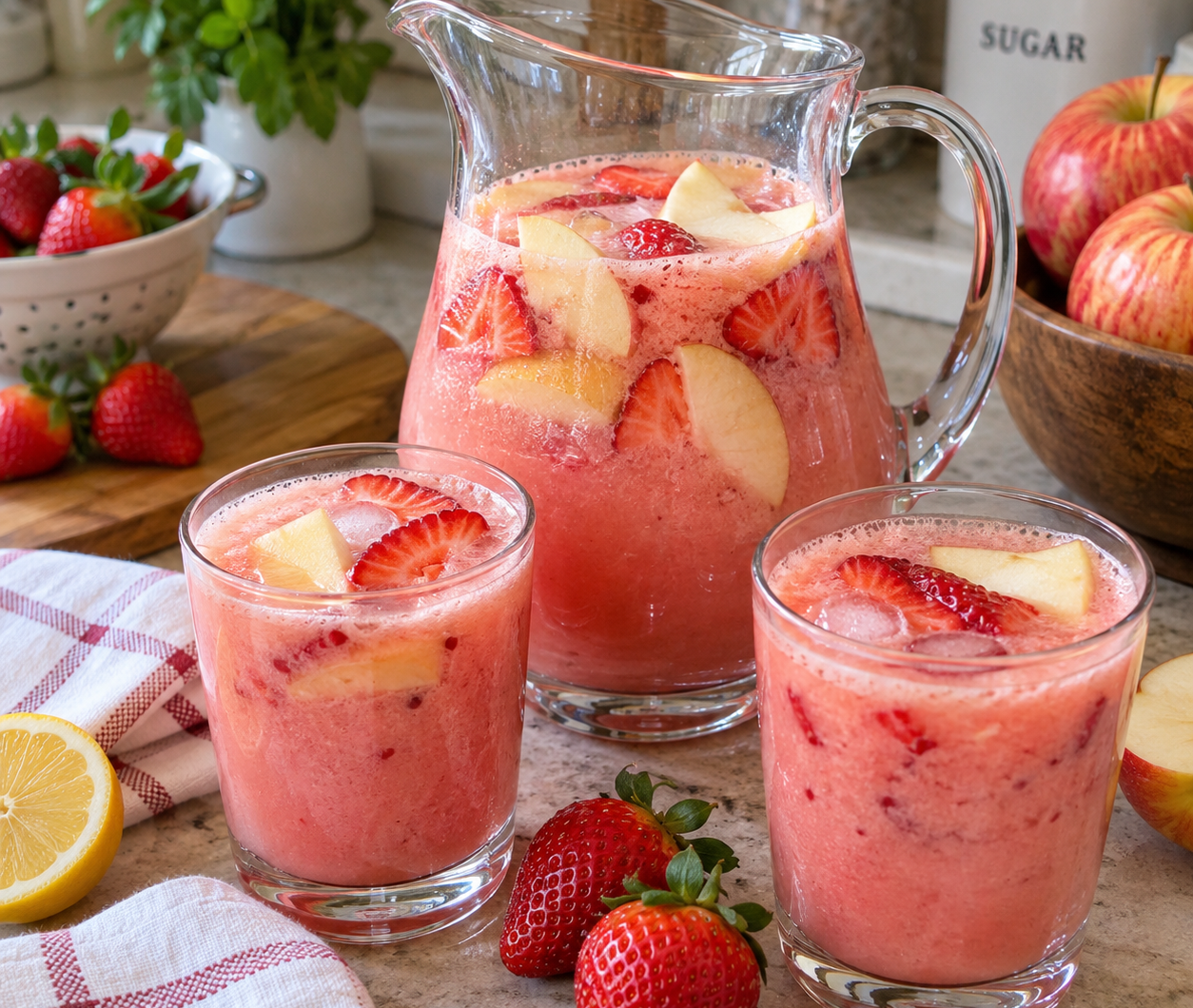
Fresh Apple Strawberry Juice
A quick and refreshing homemade juice combining fresh strawberries, crisp apples, lemon juice, and cold water.
4
servings10
minutes2
minutes90
kcal30
minutes42
minutesIngredients
1 cup (150 g) fresh strawberries, hulled and halved
2 medium apples (about 300 g), cored and chopped
1 tablespoon (15 ml) freshly squeezed lemon juice
2 cups (480 ml) cold water
2 tablespoons (30 g) honey or agave syrup, optional and adjusted to taste
Instructions
- Wash the strawberries and apples thoroughly. Hull and halve the strawberries, then core and chop the apples.
- Place strawberries, apples, lemon juice, and cold water in a blender.
- Blend on high for 1–2 minutes, or until completely smooth.
- For smoother juice, pour the mixture through a fine-mesh strainer or cheesecloth. Skip this step if you prefer the fruit pulp.
- Stir in the optional honey or agave syrup according to taste.
- Pour into glasses and serve immediately, or refrigerate for about 30 minutes before serving.
Nutrition Facts
4 servings per container
- Amount Per ServingCalories90
- % Daily Value *
- Total Fat
.2g
0%
* The % Daily Value tells you how much a nutrient in a serving of food contributes to a daily diet. 2,000 calories a day is used for general nutrition advice.