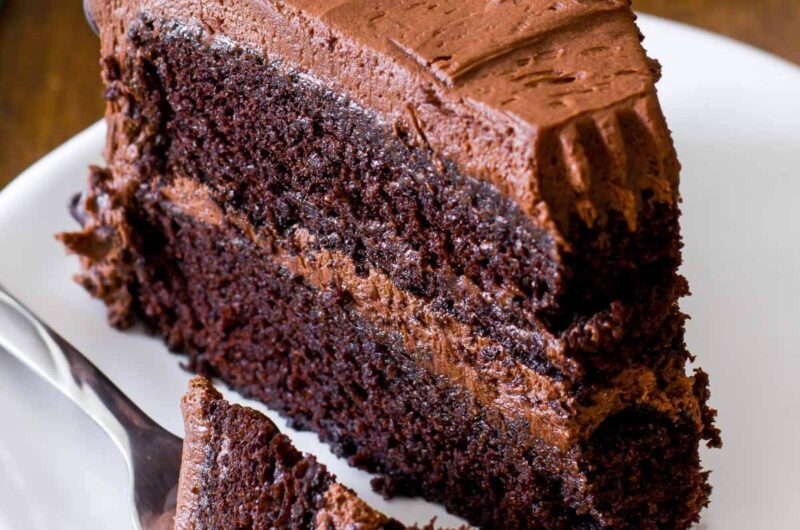
Chocolate cake has long been a staple of comfort food, birthday celebrations, and family gatherings, but getting it truly right is something of an art — balancing rich cocoa flavor, a tender crumb, and a genuinely moist texture. This version is built to be moist, flavorful, and reliably a crowd favorite, and it’s simpler to make than it might look — no electric mixer is even needed for the cake batter itself.
Why This Chocolate Cake Stands Out
What sets this cake apart is its deeply satisfying chocolate flavor paired with an incredibly moist texture. That comes down to a specific combination: high-quality bittersweet chocolate, Dutch-process cocoa powder, and a touch of instant espresso powder that enhances the cocoa flavor without tasting like coffee. Sour cream and vegetable oil keep the cake ultra-moist, while a mix of granulated sugar and light brown sugar gives it a balanced sweetness with real depth.
Sour cream brings a tangy richness that pairs beautifully with the chocolate, while egg yolks add richness and egg whites keep the crumb light and airy. And notably, this batter comes together without a mixer — just a few basic kitchen tools are enough to produce a cake that rivals something from a professional bakery.
The Role of High-Quality Chocolate and Cocoa Powder
The foundation of a great chocolate cake is the chocolate itself, and bittersweet chocolate is the star here. Compared to milk chocolate, it has a higher percentage of cocoa solids, giving it a deep, intense flavor. Dutch-process cocoa powder complements this — it’s been alkalized to reduce acidity and enhance smoothness and color, and together with the bittersweet chocolate, it builds a cake with a chocolate flavor that’s both decadent and balanced.
A small amount of instant espresso powder also goes into the batter. It won’t taste like coffee directly, but it enhances the chocolate flavor, bringing out its full richness — a classic trick used by professional bakers to deepen chocolate desserts.
Why Sour Cream and Vegetable Oil Work Wonders
Sour cream and vegetable oil are the other secret to this cake’s tenderness and moisture. Sour cream adds a slight tang that balances the sugar’s sweetness and enhances overall richness, while the fat in it helps keep the cake moist as it cools rather than drying out.
Vegetable oil is often preferred over butter in cake recipes because it stays liquid at room temperature, which helps the cake stay moist and soft for longer. Together, sour cream and vegetable oil create a light, tender crumb that’s ideal for a chocolate cake.
The Importance of Room Temperature Ingredients
Using room temperature ingredients — especially eggs and sour cream — matters more than it might seem. Room temperature eggs emulsify better, letting the fat in the batter bind properly with the wet ingredients for a smoother result. Room temperature sour cream mixes more easily too, ensuring an even texture throughout the finished cake. Pulling the eggs and sour cream out of the fridge about 30 minutes before starting speeds this process along.
How to Achieve the Perfect Cake Texture: The Role of Eggs
The number and type of eggs used here is genuinely important for balancing moisture and structure. This recipe uses a combination of whole eggs and an extra egg yolk — the whole eggs bind the ingredients together, while the extra yolk adds richness and moisture, giving the cake a tender crumb.
Why Vinegar and Vanilla Are Essential
White vinegar might seem like an unusual cake ingredient, but it plays a real role — it helps activate the baking soda, generating carbon dioxide bubbles that let the cake rise. The small amount of acid also balances the overall flavor, keeping the cake from tasting too sweet or heavy.
Vanilla extract, meanwhile, is a near-essential ingredient in almost any baked good, and this cake is no exception. It rounds out the richness of the chocolate and the tanginess of the sour cream — using pure vanilla extract rather than imitation gives the best flavor.
The Role of Butter in the Frosting
The frosting matters just as much as the cake itself. This one is a rich, smooth buttercream made with softened unsalted butter blended with melted semisweet chocolate, resulting in something decadent and creamy without being overly sweet. A touch of vanilla extract rounds out the flavor, and when properly mixed, the frosting turns light, airy, and easy to spread — the final finishing touch on a genuinely indulgent cake.
Mise en Place
For the Cake:
- 8 oz (227 g) bittersweet chocolate, finely chopped
- ⅔ cup (57 g) Dutch-process cocoa powder, sifted
- 2 teaspoons instant espresso powder
- 1 cup boiling water
- 1¾ cups (222 g) all-purpose flour
- 1 cup (200 g) granulated sugar
- ½ cup (100 g) packed light brown sugar
- 1 teaspoon salt
- 1 teaspoon baking soda
- 1 cup (227 g) sour cream, at room temperature
- ½ cup vegetable oil
- 4 large eggs plus 1 egg yolk, at room temperature
- 1 tablespoon white vinegar
- 2 teaspoons vanilla extract
For the Frosting:
- 3 sticks (340 g) unsalted butter, cut into 12 pieces, at room temperature
- 12 oz (340 g) semisweet chocolate, melted and cooled slightly
- 1 teaspoon vanilla extract
- ⅔ cup (133 g) granulated sugar
- 4 large egg whites
- ¼ teaspoon salt
Workflow: How It Comes Together
- Bloom the chocolate and cocoa in boiling water.
- Mix the dry ingredients separately.
- Combine the wet ingredients into the chocolate mixture.
- Fold in the dry ingredients and bake.
- Make a cooked meringue base for the frosting.
- Whip in the butter and chocolate.
- Assemble and frost the cake.
Making the Cake
Step 1: Preheat the oven to 350°F (175°C). Grease and flour two 8-inch round cake pans.
Step 2: In a heatproof bowl, combine the chopped bittersweet chocolate, cocoa powder, and espresso powder. Pour the boiling water over the mixture and stir until smooth, then let it cool to room temperature. This blooming step is what fully dissolves the cocoa and intensifies the chocolate flavor before it goes into the batter.
Step 3: In a separate bowl, whisk together the flour, granulated sugar, brown sugar, salt, and baking soda.
Step 4: Into the cooled chocolate mixture, whisk in the sour cream, vegetable oil, eggs, egg yolk, vinegar, and vanilla extract.
Step 5: Stir in the dry ingredients until fully combined, being careful not to overmix — overmixing at this stage can toughen the crumb.
Step 6: Pour the batter evenly into the prepared cake pans and bake for 35–40 minutes, or until a cake tester comes out clean. Let the cakes cool in the pans for 30 minutes, then transfer to a wire rack to cool completely.
Making the Frosting
Step 1: In a heatproof bowl, combine the sugar, egg whites, and salt. Set the bowl over simmering water, whisking constantly until the sugar dissolves and the mixture reaches 150°F. This step pasteurizes the egg whites while dissolving the sugar completely, which is essential for a stable, smooth frosting.
Step 2: Transfer the bowl to a stand mixer and beat the mixture until it cools and thickens into a glossy meringue.
Step 3: Gradually add the butter, one piece at a time, beating until smooth after each addition. Add the melted chocolate and vanilla extract, and beat until fluffy.
Assembling the Cake
Place one cake layer on a cake stand and spread an even layer of frosting on top. Place the second layer upside down on top of the first, which creates a flat top for a neater final look. Frost the entire cake with the remaining frosting and smooth the edges before serving.
The Best Chocolate Cake
Description: A deeply chocolatey, ultra-moist layer cake made with bittersweet chocolate, Dutch-process cocoa, and espresso powder, finished with a rich chocolate buttercream frosting made from a cooked egg white meringue base.
Ingredients:
For the Cake:
- 8 oz (227 g) bittersweet chocolate, finely chopped
- ⅔ cup (57 g) Dutch-process cocoa powder, sifted
- 2 teaspoons instant espresso powder
- 1 cup boiling water
- 1¾ cups (222 g) all-purpose flour
- 1 cup (200 g) granulated sugar
- ½ cup (100 g) packed light brown sugar
- 1 teaspoon salt
- 1 teaspoon baking soda
- 1 cup (227 g) sour cream, at room temperature
- ½ cup vegetable oil
- 4 large eggs plus 1 egg yolk, at room temperature
- 1 tablespoon white vinegar
- 2 teaspoons vanilla extract
For the Frosting:
- 3 sticks (340 g) unsalted butter, cut into 12 pieces, at room temperature
- 12 oz (340 g) semisweet chocolate, melted and cooled slightly
- 1 teaspoon vanilla extract
- ⅔ cup (133 g) granulated sugar
- 4 large egg whites
- ¼ teaspoon salt
Instructions:
Cake:
- Preheat the oven to 350°F (175°C). Grease and flour two 8-inch round cake pans.
- Combine the chopped chocolate, cocoa powder, and espresso powder in a heatproof bowl. Pour in the boiling water, stir until smooth, and let cool to room temperature.
- Whisk together the flour, granulated sugar, brown sugar, salt, and baking soda in a separate bowl.
- Whisk the sour cream, vegetable oil, eggs, egg yolk, vinegar, and vanilla extract into the cooled chocolate mixture.
- Stir in the dry ingredients until just combined, being careful not to overmix.
- Divide the batter between the prepared pans and bake for 35–40 minutes, until a cake tester comes out clean. Cool in the pans for 30 minutes, then transfer to a wire rack to cool completely.
Frosting:
- Combine the sugar, egg whites, and salt in a heatproof bowl. Set over simmering water and whisk constantly until the sugar dissolves and the mixture reaches 150°F.
- Transfer to a stand mixer and beat until cooled and thickened into a glossy meringue.
- Gradually add the butter, one piece at a time, beating until smooth. Add the melted chocolate and vanilla extract, and beat until fluffy.
Assembly:
- Place one cake layer on a stand and spread an even layer of frosting on top.
- Place the second layer upside down on top for a flat surface.
- Frost the entire cake with the remaining frosting and smooth the edges.
Notes:
- Room temperature eggs and sour cream are important for a smooth, evenly mixed batter.
- Do not overmix the batter once the dry ingredients are added, to keep the crumb tender.
- The frosting’s cooked meringue base requires reaching 150°F for food safety and proper texture — use a thermometer for accuracy.
Medical Disclaimer: This content is provided for general informational and educational purposes only and is not intended as, and should not be substituted for, professional nutritional, dietary, or medical advice. Individuals with egg allergies, dairy sensitivities, gluten sensitivities, or other dietary restrictions or health conditions should consult a qualified healthcare provider or registered dietitian before preparing or consuming this recipe. The frosting involves heating egg whites to 150°F, which should be verified with a food thermometer to ensure food safety. The creator of this content assumes no liability for any adverse effects resulting from the preparation or consumption of this recipe.