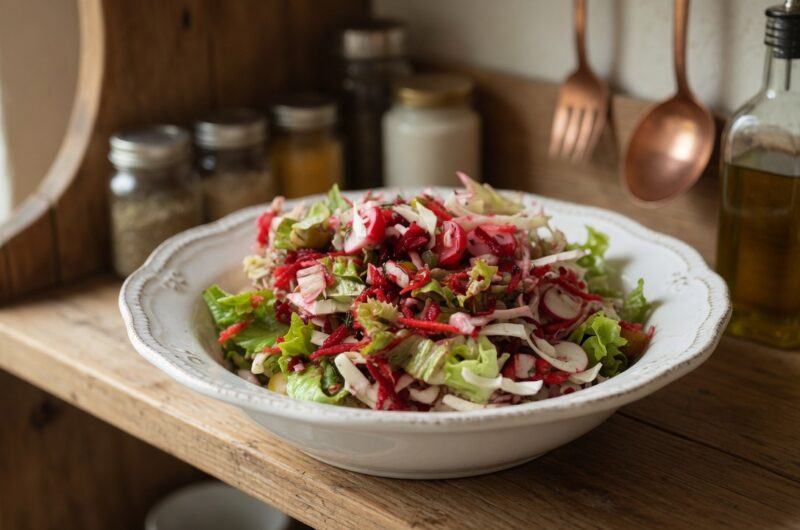
This fresh garden vegetable salad brings together crisp raw vegetables packed with natural vitamins and minerals. The combination of beets, carrots, cabbage, and leafy greens creates a colorful bowl that looks as good as it tastes. Each ingredient adds different nutrients your body needs to stay healthy and energized throughout the day.
The salad comes together quickly with just ten minutes of prep work. No cooking required, which means you preserve all the nutrients that heat would destroy. The raw vegetables keep their natural crunch and bright flavors. This makes it perfect as a side dish for dinner, a light lunch on its own, or even a component of a larger meal. The recipe is flexible enough to adjust based on what vegetables you have available in your kitchen.
Understanding Your Garden Vegetable Ingredients
Start with one medium beet, which you will grate raw for the salad. Beets provide earthy sweetness and contain betalains, compounds that act as antioxidants in your body. Two medium carrots grated add natural sweetness and beta-carotene, which your body converts to vitamin A. One bunch of radishes sliced thin brings peppery crunch and contain compounds that support digestive health.
Two cups of chopped green cabbage provide fiber and vitamin C while keeping calories low. Two cups of chopped lettuce add volume and additional nutrients without heaviness. Fresh dill brings herbal flavor and aids digestion naturally. One minced garlic clove adds pungent flavor and contains allicin, a compound with potential health benefits. Two tablespoons of chopped olives contribute healthy fats and briny flavor that seasons the entire bowl.
Preparing Your Vegetables Properly
Start by peeling your beet carefully under running water to prevent staining your hands. Peeling first makes the grating process easier and cleaner. Grate the peeled beet using the large holes on a box grater, working carefully since the beet is small. Grate your carrots next using the same large holes. Keep the beet and carrot gratings separate or mix them immediately with oil to prevent the beet from bleeding its color onto everything else.
Wash your lettuce and cabbage thoroughly under cold water to remove any dirt or debris. Pat them completely dry with paper towels or a clean kitchen cloth. Damp vegetables dilute your dressing and create a watery salad. Chop the cabbage and lettuce into thin, bite-sized pieces. The thinner pieces wilt slightly when dressed, making them easier to eat and helping flavors combine throughout the bowl.
Preparing Aromatics and Secondary Ingredients
Slice your radishes thinly using a knife or mandoline slicer if you have one. Thin radish slices stay crunchier and distribute their peppery flavor more evenly. Mince your garlic clove finely with a knife or garlic press. Fresh minced garlic releases more flavor than pre-minced varieties. Wash your dill and chop it thinly by stacking the delicate leaves and slicing with a sharp knife. Rough chopped dill can be stringy and unpleasant to eat.
Pit your olives if using whole olives, then chop them into small pieces. Pitted olives still have slight brine flavor and tender texture. If using pre-pitted olives from a jar or can, simply drain them and chop as needed. Keep all chopped ingredients separate until assembly so you can control the final distribution of each flavor element in your salad bowl.
Assembling Your Fresh Salad Bowl
Add your grated beet and carrot to a large bowl first, as they serve as the salad base. Layer the chopped cabbage and lettuce over the root vegetables. The greens will rest on top and stay slightly separate from the beet juice. Scatter your sliced radishes across the surface for visual appeal and crunch. Sprinkle the minced garlic and chopped dill evenly over the vegetables.
Add your chopped olives last so they distribute throughout rather than settling to the bottom. At this point, your salad bowl should look colorful with different textures and vegetable sizes visible. The assembly method matters because it helps you see everything clearly before dressing. This allows you to adjust any ingredient that seems under or over-represented in your particular mix.
Dressing Your Salad with Oil and Acid
Pour about two tablespoons of quality olive oil or flax seed oil over your assembled vegetables. Olive oil contributes heart-healthy fats and carries fat-soluble vitamins from the vegetables. Flax seed oil adds omega-3 fatty acids and has a slightly nutty flavor. Squeeze fresh lemon juice over the vegetables, starting with one tablespoon and adding more to taste. The acid from lemon juice brightens flavors and begins breaking down cell walls slightly, making vegetables more tender.
Sprinkle salt and black pepper to your taste preference. Start with half a teaspoon of salt and quarter teaspoon of pepper, then adjust after tossing. The amount depends on how much sodium you want and whether your olives already contributed salty flavor. Toss everything together gently but thoroughly, making sure the dressing coats all vegetables and the oil and lemon juice combine into an emulsion that holds everything together.
Flavor Building and Taste Adjustments
After initial tossing, take a small bite of your salad and assess the flavors. The beet should provide subtle earthiness, the carrot natural sweetness, the radishes peppery heat, and the dill herbal brightness. The garlic should add subtle pungency without overwhelming. The olives should provide salty and briny notes that tie flavors together. If any element seems too strong or too weak, you can adjust.
Add more lemon juice if the salad tastes flat or if the beet flavor dominates. Add more salt if flavors seem muted or the vegetables taste one-dimensional. Add more dill if you want stronger herb flavor. Add more garlic if you enjoy aggressive garlic taste. Add more olives if you want more briny saltiness. The beauty of this salad is that it tolerates flavor adjustments right up until serving time.
Nutritional Density and Health Benefits
This salad delivers substantial nutrition in a low-calorie package. The mix of raw vegetables provides approximately 290 calories per serving with 13 grams of fiber, which supports digestive health and keeps you feeling full. The salad contains seven grams of plant-based protein from the vegetables and olives, making it substantial enough to serve as a light meal or substantial side dish.
The variety of vegetables ensures you get different vitamins and minerals. Beets provide manganese and folate. Carrots contribute vitamin A and potassium. Cabbage offers vitamin K and vitamin C. Lettuce adds minerals like iron and magnesium. Radishes contain glucosinolates, which some research suggests may have protective properties. Olives add monounsaturated fats, the type considered beneficial for heart health. Together, these ingredients create nutritionally complete nutrition that your body can use effectively.
Storage Methods and Keeping Your Salad Fresh
Undressed salad keeps longest when stored properly. Layer your prepared vegetables in an airtight container with paper towels between layers to absorb excess moisture. The paper towels prevent the vegetables from becoming waterlogged and soggy. Store the container in your refrigerator where it stays fresh for three to four days. The beet will gradually bleed color, turning everything slightly pink over time, but the flavor and nutrition remain excellent.
Keep your dressing ingredients separate until just before serving. Combine oil, lemon juice, salt, and pepper in a small jar or container. This dressing keeps refrigerated for up to one week. When ready to serve, pour the dressing over your prepared vegetables and toss thoroughly. This method prevents your vegetables from becoming wilted and waterlogged while allowing you to prepare salad components in advance for busy weeknights.
Adapting This Recipe for Personal Preferences
You can easily modify this salad based on your vegetable preferences or what you have on hand. Add or increase any of the raw vegetables you enjoy. Substitute different greens like spinach, arugula, or mixed salad greens for the lettuce. Replace the cabbage with shredded Brussels sprouts for a slightly different texture and flavor. Add sliced bell peppers for sweetness and additional color variety.
Experiment with different herbs instead of or in addition to dill. Fresh parsley, cilantro, or chives work well in this salad. Try different vinegars like balsamic vinegar or apple cider vinegar in place of lemon juice for different flavor profiles. Add nuts like walnuts or sunflower seeds for crunch and additional healthy fats. Add crumbled feta cheese or goat cheese if you want dairy protein. Each variation maintains the salad’s nutritious character while offering different eating experiences.
Serving This Salad for Different Occasions
Serve this fresh garden salad alongside grilled fish or chicken for a balanced meal that provides vegetables, protein, and healthy fats. The fresh, light quality makes it particularly good alongside rich or heavy main dishes. Pair it with whole grain bread and hummus for a vegetarian meal that provides complete protein and sustained energy. Serve it on its own as a light lunch, perhaps adding a handful of chickpeas or white beans for additional plant-based protein.
Include this salad at picnics and outdoor gatherings where it travels well and stays fresh without refrigeration for reasonable periods. Pack it in a lunchbox with dressing on the side for work or school lunch. Serve it as a side at holiday meals where it provides bright, fresh flavors that balance rich traditional dishes. The versatility of this salad makes it appropriate for nearly any eating occasion where you want vegetables and nutrition.
Tips for Making This Salad Regularly
Prepare your ingredients in batches on a day when you have time, such as Sunday afternoon. Grate your beets and carrots, chop your cabbage and lettuce, and slice your radishes. Store each ingredient separately in airtight containers. When you want salad throughout the week, simply combine your prepared ingredients with fresh herbs and dressing. This method encourages you to eat more vegetables because the prep work is already done.
Keep quality olive oil and fresh lemons on hand so you can make dressing anytime. Invest in a good box grater or microplane that makes grating vegetables easier and faster. A sharp knife matters for chopping cabbage and lettuce thinly without crushing the vegetables. A mandoline slicer can speed up radish slicing if you make this salad frequently. These simple tools transform vegetable prep from tedious to quick and enjoyable.
Understanding Seasonal Variations
This salad works year-round, but ingredient quality varies by season. In summer, use fresh local beets from farmers markets, which have superior flavor and texture compared to supermarket beets stored for months. Spring brings tender, young lettuce and fresh herbs at peak flavor. Fall offers carrots and radishes at their sweetest and crunchiest. Winter storage vegetables like beets, carrots, and cabbage keep well from fall harvest through spring.
Consider the seasons when choosing your vegetables and adjust quantities accordingly. Summer calls for lighter, more tender salads with thinner vegetable cuts. Winter vegetables can be grated more generously since they have stronger, earthier flavors that stand up to larger quantities. Spring herbs taste fresher and more delicate. Adjusting your salad seasonally keeps the eating experience fresh and interesting while supporting local agriculture and seasonal eating patterns.
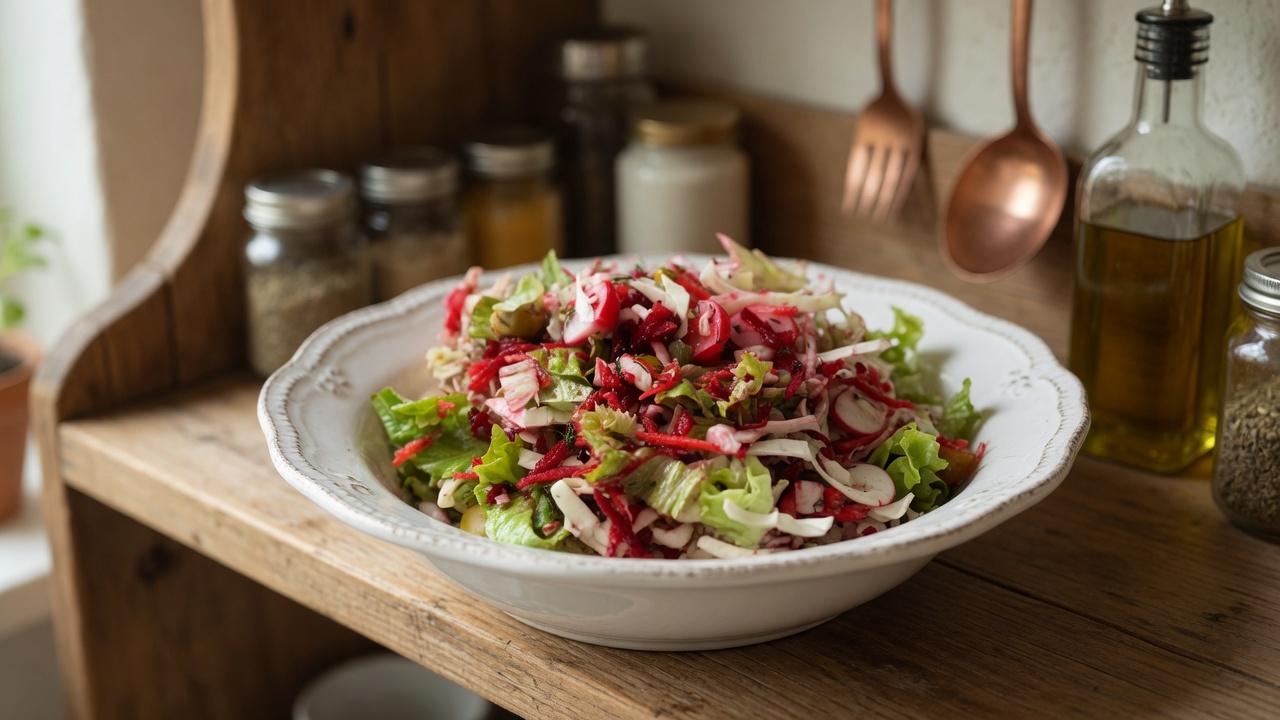
Vitamin-Packed Vegetable Salad
A vibrant, nutrient-packed raw vegetable salad combining grated beets and carrots with crisp cabbage, fresh greens, and tangy olives.
1
servings10
minutes290
kcal10
minutesIngredients
Beet: 1 medium, peeled
Carrots: 2 medium, peeled
Radishes: 1 bunch, sliced thin
Green cabbage: 2 cups, chopped thin
Lettuce: 2 cups, chopped thin
Fresh dill: 2 tablespoons, chopped
Garlic clove: 1, minced
Pitted olives: 2 tablespoons, chopped
Olive oil or flax seed oil: to taste
Fresh lemon juice: to taste
Salt and black pepper: to taste
Instructions
- Peel the beet under cool running water, rubbing gently to remove the thin skin. Using the large holes on a box grater, grate the beet into a bowl. Peel the carrots and grate them into the same bowl using the same grater side. Set aside.
- Rinse lettuce and cabbage under cold running water until water runs clear. Pat completely dry with paper towels. Chop cabbage into thin pieces using a sharp knife. Chop lettuce into thin, bite-sized pieces. Wash dill, pat dry, and chop thinly.
- Slice radishes thin using a knife or mandoline slicer. Mince garlic clove finely with a knife or garlic press. Chop pitted olives into small pieces.
- Place grated beet and carrot in a large bowl. Layer chopped cabbage and lettuce over the root vegetables. Scatter sliced radishes, minced garlic, chopped dill, and chopped olives over the greens.
- Drizzle salad with olive oil or flax seed oil and fresh lemon juice to taste. Sprinkle with salt and pepper. Toss gently but thoroughly until all vegetables are coated with dressing. Serve immediately.
Nutrition Facts
- Calories: 290kcal
- Fat: 18g
- Carbohydrates: 36g
- Fiber: 13g
- Sugar: 17g
- Protein: 7g