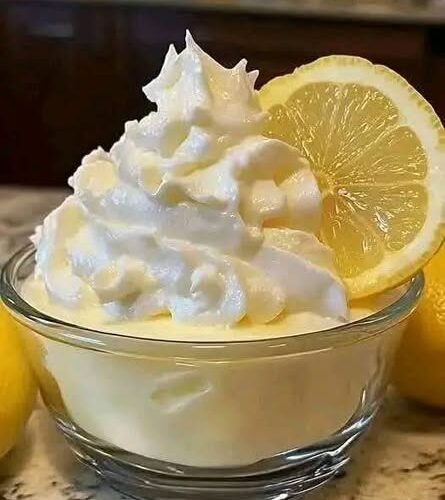
This is a light, airy lemon mousse built to deliver the bright citrus flavor of a traditional mousse while containing noticeably fewer calories than richer, custard-based versions. Rather than making lemon curd from scratch, this recipe relies on high-quality prepared lemon curd, which cuts out a lengthy cooking step while still delivering concentrated, balanced lemon flavor. The fluffy texture comes from two separately whipped components — pasteurized egg whites and heavy whipping cream — which are folded together with the lemon curd to create a cloud-like consistency.
Because it requires no baking, this dessert is especially well suited to warmer months when turning on the oven isn’t appealing, and it works equally well for casual family dinners or more elegant, dressed-up presentations for guests. The recipe yields around 4 generous, 6 moderate, or 8 small party-sized servings, giving it real flexibility depending on the occasion.
About Lemon Mousse
Mousse takes its name from the French word for “foam,” a fitting description of the airy texture this dessert is known for. Traditional lemon mousse recipes often lean heavily on cream, butter, sugar, and egg yolks, producing a dense, rich result. This lighter version keeps the luxurious mouthfeel that makes mousse appealing while reducing that heaviness, largely by leaning on prepared lemon curd instead of building the lemon flavor from a separate custard base. Because the curd already contains lemons, eggs, sugar, and butter, it blends smoothly into the whipped cream and egg whites without needing any additional cooking.
Getting Everything Ready
Because whipped egg whites are sensitive to both temperature and even the smallest trace of grease, getting your ingredients to the right temperature and your equipment completely clean before you start is essential here, not just a nice-to-have.
Equipment to have ready:
- An electric hand mixer or stand mixer
- Two large mixing bowls
- A rubber spatula
- Measuring spoons
- Serving glasses or ramekins
- A citrus zester
- Access to a refrigerator for chilling
Main ingredients to have ready:
- 3 pasteurized eggs, room temperature
- ¾ teaspoon cream of tartar
- ½ cup heavy whipping cream
- 2 tablespoons granulated sugar
- 1 jar (8 ounces) prepared lemon curd
Optional garnishes to have on hand: fresh lemon zest, thin lemon slices, fresh mint leaves, fresh raspberries, fresh blueberries, strawberries, crushed graham crackers, toasted coconut flakes, white chocolate shavings, or powdered sugar for dusting.
Bringing the eggs to room temperature before you start whipping is worth planning for ahead of time — room-temperature egg whites whip more efficiently and reach a greater volume than cold ones, which directly affects the final texture of the mousse.
Workflow: How the Process Comes Together
This recipe moves through a precise sequence, with two components whipped separately before being folded together:
- Separate the eggs, keeping only the whites for this recipe.
- Whip the egg whites to stiff peaks, adding cream of tartar partway through.
- Whip the cream to stiff peaks in the same bowl, adding sugar gradually.
- Fold in the lemon curd until smooth and evenly colored.
- Fold in the whipped egg whites, in stages, to lighten the mixture without deflating it.
- Portion into serving glasses or ramekins.
- Chill for at least two hours before serving.
Because both the egg whites and the whipped cream need to reach stiff peaks before they’re combined with anything else, doing these two steps first — rather than trying to rush toward the lemon curd and folding stage — is what sets up the rest of the mousse to hold its airy texture.
Approved Variations & Swaps
Based strictly on what’s built into this recipe, here are the adjustments it already allows for:
- Lemon Raspberry Mousse: fold fresh raspberries into the finished mousse before chilling.
- Lemon Blueberry Mousse: top each serving with fresh blueberries.
- Lemon Coconut Mousse: add toasted coconut flakes as garnish for a tropical twist.
- Lemon Strawberry Mousse: layer sliced strawberries between spoonfuls of mousse.
- Lemon Mint Mousse: add finely chopped fresh mint directly into the mousse mixture.
- Lemon Orange Mousse: mix a small amount of orange zest into the lemon curd mixture for a citrus blend.
- Traditional serving: top with fresh lemon zest, mint leaves, or fresh berries, and serve immediately from the refrigerator.
- Elegant presentation: use clear dessert glasses, add a layer of crushed graham crackers at the bottom, pipe the mousse in neatly, and garnish with lemon curls and fresh berries.
No other ingredient substitutions are specified in the source recipe, so changes beyond these listed variations would go beyond what’s actually described here.
Step-by-Step Whipping and Folding Strategy
Getting this mousse to come out properly light and airy depends almost entirely on technique during the whipping and folding stages.
Start with completely clean, grease-free bowls and beaters. Even a small amount of oil can prevent egg whites from whipping properly, so this is worth double-checking before you begin.
Separate the eggs carefully, keeping yolk out of the whites. Any trace of yolk can interfere with the whites reaching full volume.
Whip the egg whites in stages. Begin on medium-low speed until foamy, about a minute in, then add the cream of tartar and gradually increase to high speed, continuing until stiff peaks form that stand upright without collapsing when the beaters are lifted. Pasteurized egg whites often need more time to whip than regular egg whites, so patience at this stage matters.
Whip the cream separately, adding sugar gradually as it thickens. Continue until stiff peaks form, watching carefully to avoid overwhipping, which can turn the cream grainy rather than smooth.
Fold in the lemon curd gently, not stirred vigorously. Using a rubber spatula, fold until the mixture is completely smooth, pale yellow, and evenly colored throughout.
Fold in the egg whites in three additions, not all at once. Adding about a third first to lighten the mixture, then folding in the remainder in two more additions, keeps the process gentle enough to preserve the air already whipped into the whites.
Use slow, upward folding motions from the bottom of the bowl. This technique is what preserves as much trapped air as possible — folding too aggressively removes air and results in a denser dessert than intended.
Chill for the full two hours before serving. This isn’t a step to shorten; the mousse firms up and its flavors continue to develop during this time, and skipping or cutting short the chilling period prevents it from reaching its ideal consistency.
Lower-Calorie Lemon Mousse
Description: A light, airy lemon mousse made with whipped egg whites, whipped cream, and prepared lemon curd, delivering bright citrus flavor with fewer calories than traditional custard-based mousse recipes. No baking required.
Duration:
- Preparation Time: 20 minutes
- Chilling Time: 2 hours
- Total Time: 2 hours 20 minutes
- Yield: 4 generous servings, 6 moderate servings, or 8 small party-size servings
Ingredients
- 3 pasteurized eggs, room temperature
- ¾ teaspoon cream of tartar
- ½ cup heavy whipping cream
- 2 tablespoons granulated sugar
- 1 jar (8 ounces) prepared lemon curd
Optional garnishes: fresh lemon zest, thin lemon slices, fresh mint leaves, fresh raspberries, fresh blueberries, strawberries, crushed graham crackers, toasted coconut flakes, white chocolate shavings, powdered sugar for dusting
Instructions
- Separate the eggs, placing the whites in a large clean mixing bowl. Reserve the yolks for another use.
- Using an electric mixer, beat the egg whites on medium-low speed until foamy, about 1 minute. Add the cream of tartar, then gradually increase to high speed and beat until stiff peaks form. Transfer to a separate bowl.
- In the same bowl, pour in the heavy whipping cream and whip on medium speed. As it begins to thicken, gradually add the sugar. Continue whipping until stiff peaks form, being careful not to overwhip.
- Add the prepared lemon curd to the whipped cream and gently fold with a rubber spatula until smooth and evenly colored.
- Fold in about one-third of the whipped egg whites to lighten the mixture, then fold in the remaining whites in two more additions, using slow, upward motions to preserve air.
- Spoon the finished mousse into individual serving glasses, dessert cups, or ramekins, smoothing the tops or piping for a more decorative presentation.
- Chill in the refrigerator for at least 2 hours before serving.
Notes
- Use room-temperature egg whites for the best volume when whipping.
- Ensure all bowls and beaters are completely clean and grease-free before starting.
- Serve traditionally topped with fresh lemon zest, mint leaves, or fresh berries.
- For an elegant presentation, layer crushed graham crackers at the bottom of clear glasses, pipe the mousse in, and garnish with lemon curls and berries.
- Common mistakes to avoid: using cold egg whites, overmixing, overwhipping the cream, using dirty bowls, skipping sufficient chilling time, and folding too aggressively.
- Store in covered containers in the refrigerator; best consumed within 24 hours, and safe for up to 2 days when properly refrigerated.
- Freezing is possible but not generally recommended, as texture may change after thawing. If freezing, store in airtight containers for up to 1 month and thaw overnight in the refrigerator; some separation may occur.
- Nutrition per serving (based on 6 servings): 190–220 kcal, 3–4g protein, 13–15g fat, 15–18g carbohydrates, 12–15g sugar, moderate vitamin C. Actual values may vary depending on the brand of lemon curd used.
Disclaimer: This recipe is provided for general informational purposes only and does not constitute medical or dietary advice. Nutritional values are estimates and may vary based on specific ingredients and brands used. This recipe uses raw egg whites; pasteurized eggs are recommended specifically to reduce the risk associated with consuming raw eggs, but individuals who are pregnant, immunocompromised, elderly, or otherwise advised to avoid raw or undercooked eggs should consult a qualified healthcare provider before preparing or consuming this recipe. Individuals with food allergies or dietary restrictions, including egg or dairy sensitivities, should also consult a qualified healthcare provider or registered dietitian. Neither the author nor the publisher assumes responsibility for any adverse effects resulting from the preparation or consumption of this recipe.