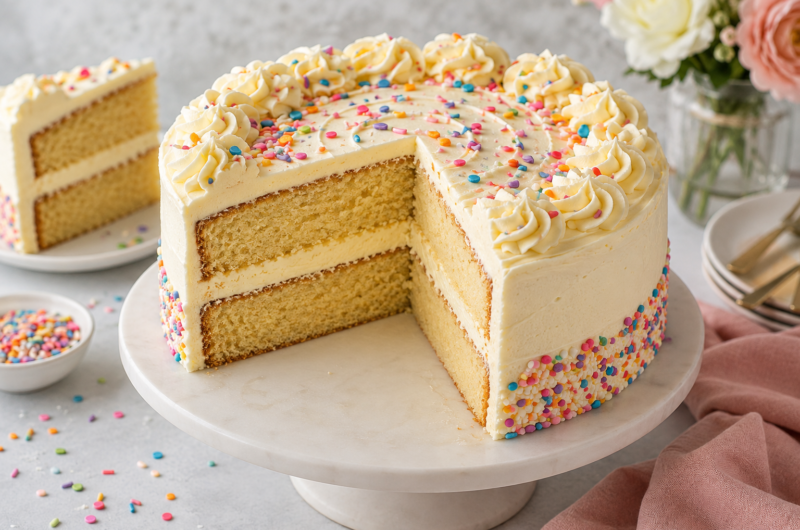
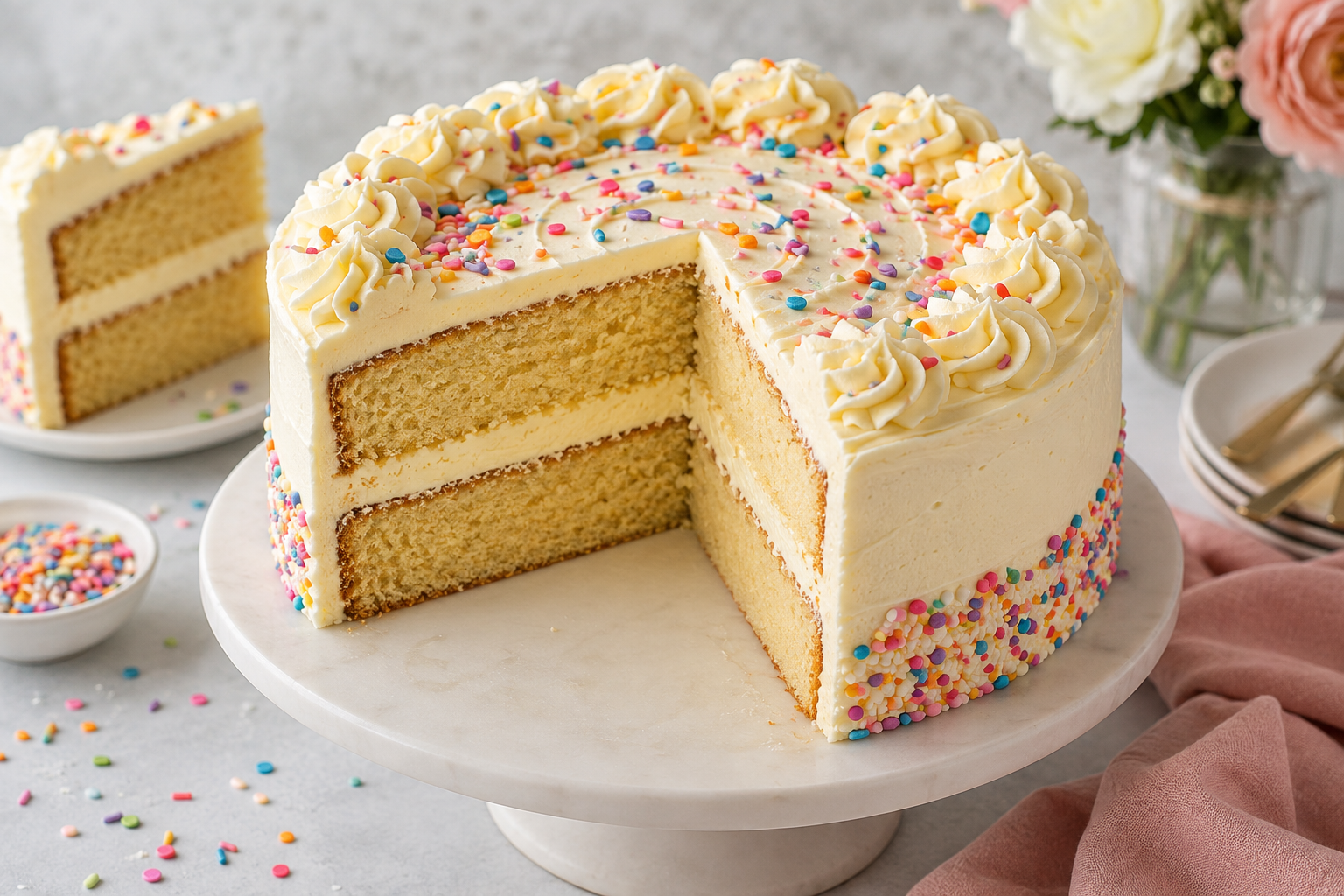
Keto Vanilla Birthday Cake is a soft, buttery celebration cake designed for anyone looking for a low-carb alternative to a traditional birthday cake. Instead of wheat flour and regular sugar, this recipe uses almond flour with monk fruit or erythritol to create tender vanilla cake layers with considerably fewer carbohydrates. The layers are finished with a smooth sugar-free vanilla buttercream made from butter, powdered erythritol, vanilla, and heavy cream. The result is an attractive layered dessert suitable for birthdays, anniversaries, family celebrations, or any occasion that calls for cake.
One important difference between this keto birthday cake and a conventional vanilla sponge is the way almond flour behaves during baking. Almond flour does not contain the gluten structure found in wheat flour, so the cake will not rise as dramatically as a standard sponge. Instead, it develops a moist, rich, and relatively tender crumb. The modest rise actually works well for a layered celebration cake because the finished layers are easier to stack and require less trimming before frosting.
Why You Like This Recipe
Finding a birthday cake that fits a keto or low-carb eating plan can be challenging because traditional cakes usually contain large quantities of refined flour and sugar. This recipe replaces those ingredients with almond flour and sugar-free sweeteners while maintaining the familiar combination of vanilla cake and creamy buttercream. According to the supplied recipe, the unfrosted single-layer cake contains approximately 3 grams of net carbohydrates per slice.
The recipe is also naturally wheat-free because almond flour replaces traditional flour. This makes it potentially suitable for a gluten-free category as well, provided all packaged ingredients, including the baking powder, sweeteners, vanilla extract, and other products used, are verified gluten-free when required. However, its strongest identity remains a keto dessert because both the cake and frosting have been specifically formulated around low-carb ingredients.
What Makes This Vanilla Cake Keto-Friendly?
The two ingredients that make the biggest difference are almond flour and sugar-free sweetener. Regular birthday cake usually relies heavily on wheat flour and granulated sugar, both of which contribute substantial carbohydrates. Here, fine almond flour creates the cake structure while monk fruit or erythritol provides sweetness without using conventional sugar.
The frosting follows the same principle. Instead of traditional powdered sugar, it uses powdered erythritol. This allows the cake to have a classic sweet vanilla buttercream while remaining consistent with the recipe’s low-carb approach. Heavy cream, butter, eggs, and coconut oil contribute richness without requiring high-carbohydrate ingredients.
Why Almond Flour Works for Keto Cake
Almond flour is central to the texture and nutritional profile of this keto vanilla cake. It creates a richer, slightly denser crumb than wheat flour while contributing the structure needed to hold the cake together. Fine almond flour is recommended rather than coarse almond meal because a finer grind produces a smoother and softer finished cake.
It is important not to treat almond flour exactly like wheat flour during preparation. Once it has been added to the wet ingredients, mix only until the batter becomes smooth and no dry flour remains. Excessive mixing is unnecessary and may negatively affect the cake’s texture. Gentle handling is especially useful when you want layers that remain tender after cooling.
Preparing Your Cake Pan
Properly preparing the cake pan is particularly important with an almond flour cake because the baked layers are more delicate than a conventional wheat-based sponge. The recipe uses a 9-inch round springform pan. Begin by lightly greasing the bottom and sides with melted coconut oil or butter.
Next, cut parchment paper to fit the bottom of the pan. Place it firmly against the base and lightly grease the parchment and sides again. This combination of greasing and parchment creates extra protection against sticking and makes it easier to release the delicate cake layer without tearing it.
Preparing the Keto Vanilla Cake Batter
Preheat the oven to 325°F or 160°C before beginning the batter. In a large mixing bowl, combine the eggs, granulated monk fruit or erythritol, vanilla extract, and melted coconut oil or butter. Whisk until the ingredients form a smooth, evenly combined mixture.
Add the almond flour and baking powder. Mix only until there are no visible pockets of dry flour. Unlike recipes that require prolonged beating to incorporate large amounts of air, this cake simply needs a smooth and evenly combined batter. Avoid continuing to mix once that consistency has been reached.
Baking the First Cake Layer
Pour the prepared batter into the greased and parchment-lined springform pan. Spread the surface evenly so the layer has a consistent thickness. Place the pan in the preheated oven and bake for approximately 25 minutes.
Check the center with a toothpick before removing the cake. It should come out clean or with only a few moist crumbs attached. The cake may develop a slight dome and will not rise as dramatically as a traditional vanilla sponge. This is normal for an almond flour cake and should not be interpreted as a baking failure.
Making the Second Cake Layer
This recipe creates a two-layer birthday cake, but each layer is prepared as its own complete batch. After baking the first cake, allow it to cool in the pan for approximately five minutes before carefully transferring it to a wire rack.
Wash and dry the springform pan, grease it again, add fresh parchment, and repeat the complete cake recipe for the second layer. This means the quantities listed under “Vanilla Cake” are required for each individual layer and should be made twice when preparing the complete two-layer birthday cake.
Why Cooling the Cake Is Essential
Do not rush directly from baking to decorating. Warm cake and buttercream do not work well together because heat softens the butter in the frosting. If buttercream is spread over a warm cake, it can begin melting, sliding down the sides, or soaking into the cake instead of forming a smooth decorative layer.
Allow both cake layers to become completely cool before frosting. The source recommends allowing approximately one to two hours for proper cooling. Although this extends the total preparation time, most of it is inactive time. Proper cooling makes assembly considerably easier and gives the finished keto birthday cake a cleaner appearance.
Making Sugar-Free Vanilla Buttercream
The vanilla buttercream begins with softened unsalted butter and vanilla extract. Beat them together on high speed until the mixture becomes pale, creamy, and fluffy. Starting with properly softened butter is important because very cold butter will be difficult to whip smoothly, while melted butter will not create the desired frosting structure.
Reduce the mixer to low speed and gradually add the powdered erythritol, approximately ½ cup at a time. Once incorporated, increase to medium speed and continue beating for about two minutes. Add the heavy cream and mix for another minute until the frosting becomes smooth and spreadable.
Why Powdered Erythritol Is Used
Granulated sweetener works in the cake batter, but powdered erythritol is a better choice for buttercream. Its fine consistency incorporates more smoothly into softened butter, helping create a frosting that is easier to spread over the cake.
Using a coarse granulated sweetener in frosting could create a noticeably gritty texture. Powdered erythritol allows the recipe to achieve sweetness without relying on traditional confectioners’ sugar. This distinction is important because the sweetener affects both the low-carb character of the recipe and the texture of the finished frosting.
Assembling the Keto Birthday Cake
Once both layers are completely cool, inspect their tops. If either cake has developed a noticeable dome, carefully trim it to create a flatter surface. This helps the layers sit evenly and prevents the finished cake from leaning.
Place the first cake layer on a serving plate or cake stand. Spread an even layer of vanilla buttercream over the top, then carefully position the second cake layer over the frosting. Use the remaining buttercream to cover the top and sides. Smooth the surface with an offset spatula until you achieve your preferred finish.
Chilling the Finished Cake
The cake can be served after frosting, but the supplied recipe suggests refrigerating it for approximately two hours when a firmer finish is preferred. Chilling allows the buttercream to set and can make the cake easier to slice cleanly.
If you refrigerate the finished cake, keep it properly covered so it does not absorb odors from other refrigerated foods. Depending on your preference, you can allow the cake to sit briefly at room temperature before serving so the buttercream softens slightly.
Why This Keto Cake Has a Modest Rise
Do not expect an almond flour cake to behave exactly like a conventional birthday cake made from all-purpose or cake flour. Wheat flour contains gluten-forming proteins that create an elastic structure capable of trapping expanding gases during baking. Almond flour lacks that same gluten network.
As a result, this keto vanilla birthday cake rises only modestly. A small dome in the center is completely normal. For a layered birthday cake, this can actually be useful because the individual cakes remain relatively even and require less trimming before they are stacked and decorated.
Choosing the Right Almond Flour
Fine almond flour is the preferred choice for this cake. Almond meal is typically coarser and may include more of the almond skin, which can result in a heavier and rougher cake texture. Since this recipe is intended to resemble a soft celebration cake, a finely ground product provides the best result.
Do not replace almond flour with coconut flour using the same measurement. Coconut flour behaves very differently and absorbs considerably more liquid. Since the original recipe does not provide a tested coconut flour substitution, retaining the specified almond flour is the safest way to preserve the intended texture and ingredient balance.
Conventional Oven Adjustment
The supplied recipe includes guidance for cooks who are not using a convection oven. It recommends increasing the oven temperature by approximately 25°F or 15°C when using a conventional oven and checking the cake a few minutes beyond the baseline baking time.
Ovens can vary considerably, so visual and physical signs of doneness remain important. Check the center with a toothpick and avoid relying exclusively on the timer. Once the toothpick emerges clean or with a few crumbs, the cake is ready to come out of the oven.
Is This Cake Sugar-Free?
This recipe uses monk fruit or erythritol in the cake and powdered erythritol in the buttercream rather than conventional added sugar. The supplied nutritional information reports approximately 0.8 grams of sugar per slice for the single-layer cake without frosting.
For website categorization, Keto Recipes is the strongest primary category. It can also fit a Low-Carb Desserts category. If you maintain a sugar-free category, be careful with terminology because “sugar-free” labeling can have specific regulatory definitions depending on your audience and location. “No Added Sugar” or “Made Without Refined Sugar” should likewise only be used when accurate for the exact products selected.
Is Keto Vanilla Birthday Cake Gluten-Free?
The recipe does not contain wheat flour and uses almond flour instead, making it naturally free from gluten-containing flour. However, anyone preparing it for someone with celiac disease or a medically necessary gluten-free diet should verify the labels of baking powder, sweeteners, vanilla extract, and other packaged ingredients for potential cross-contact.
For a recipe website, this means the cake can reasonably be included under gluten-free recipes when you clearly recommend certified or verified gluten-free packaged ingredients where necessary. Nevertheless, Keto remains the most precise primary classification because the ingredient selection was specifically designed around a low-carbohydrate cake.
Serving Keto Birthday Cake
This two-layer vanilla cake works naturally as a birthday or celebration centerpiece. Use a sharp knife to divide it into approximately 12 slices. Because almond flour, butter, eggs, and buttercream create a rich cake, relatively moderate slices should still provide a satisfying dessert.
The simple vanilla flavor also makes this cake suitable for different celebrations without needing changes to the basic recipe. Decorative elements can be chosen according to the occasion, but remember that conventional candies, sugary sprinkles, syrups, or frosting decorations can significantly increase the carbohydrate and sugar content.
Storing Leftover Keto Cake
Store leftover cake in an airtight cake container in the refrigerator for up to four days. Keeping it covered helps prevent the cake from drying out and protects the buttercream from absorbing other refrigerator odors.
The cake can also be frozen for longer storage. Freeze individual slices when you want convenient portions or freeze the entire cake when preparing well ahead of an event. Use freezer-safe bags or containers, then thaw the frozen cake overnight in the refrigerator or allow it to come to serving temperature as appropriate.
Notes for the Best Results
Use fine almond flour rather than coarse almond meal for the softest cake texture. Once the almond flour has been added, mix only until the batter becomes smooth. Prepare the springform pan carefully with both grease and parchment to make removing the delicate cake easier. The cake will rise only slightly, which is normal for this recipe.
Whole eggs are important to the structure and should not be replaced with flax eggs or similar egg substitutes. Bake each cake layer separately and allow both layers to cool completely before applying buttercream. Frosting a warm cake can cause the buttercream to soften or melt.
Keto Vanilla Birthday Cake
A soft and buttery keto vanilla cake made with almond flour and sugar-free sweetener, layered with creamy vanilla buttercream. An easy low-carb celebration cake for birthdays and special occasions.
12
servings20
minutes25
minutes151
kcal120
minutes10
minutes2
hours55
minutesIngredients
- Vanilla Cake — Per Layer, Make Twice
4 large eggs
½ cup monk fruit or erythritol
1 tsp vanilla extract
2 tbsp melted coconut oil or butter
2 cups almond flour
1 tsp baking powder
- Vanilla Buttercream
1 cup unsalted butter, softened
1½ cups powdered erythritol
1 tsp vanilla extract
2–3 tbsp heavy cream
Instructions
- Preheat oven to 325°F/160°C. Grease and line a 9-inch pan.
- Whisk eggs, sweetener, vanilla, and melted coconut oil.
- Add almond flour and baking powder. Mix until smooth.
- Pour into the pan and bake for about 25 minutes.
- Cool for 5 minutes, then transfer to a wire rack.
- Repeat the recipe for the second cake layer.
- Beat butter and vanilla until fluffy.
- Gradually beat in powdered erythritol.
- Add heavy cream and beat until smooth.
- Frost between the cooled layers, then cover the top and sides.
- Chill for about 2 hours for a firmer finish.
Nutrition Facts
12 servings per container
- Amount Per ServingCalories151
- % Daily Value *
- Total Fat
7.2g
9%
- Total Carbohydrate
3g
2%
- Protein 4.8g 8%
* The % Daily Value tells you how much a nutrient in a serving of food contributes to a daily diet. 2,000 calories a day is used for general nutrition advice.