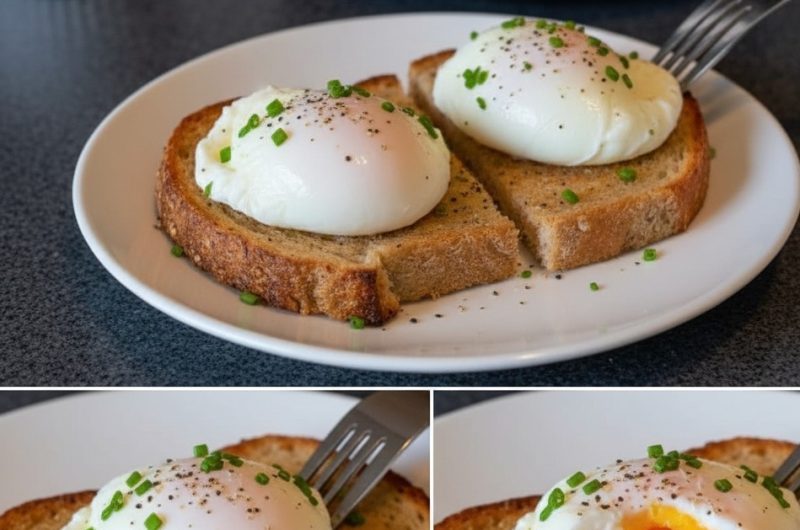
Poached eggs are cooked gently in simmering water rather than boiled or fried, which is what gives them their signature soft, runny yolk and tender, compact white. The technique relies on just one main ingredient — a fresh egg — with an optional splash of vinegar to help the whites hold their shape. It’s a simple method, but a precise one: water temperature, timing, and a bit of technique in preparing the egg before it goes into the water are what separate a neat, restaurant-style poached egg from one that spreads apart into wisps.
This is a versatile base recipe rather than a dish on its own — poached eggs work over toast, avocado toast, oatmeal, salads, or nearly any breakfast plate. The whole process, from heating the water to removing the finished egg, takes only a few minutes per egg, and the eggs can also be poached ahead of time and reheated later, making this a genuinely make-ahead-friendly technique despite feeling like a delicate one.
Getting Everything Ready
Because poaching moves quickly once the egg hits the water, having your tools and egg prepped in advance makes a real difference to the final result.
Equipment to have ready:
- A large pot or deep pan, with enough room for the egg to float freely
- A fine mesh strainer or sieve
- A small bowl, to catch the strained excess egg white
- A ramekin, to hold the egg just before it goes into the water
- A slotted spoon
- A spoon, for stirring the water into a vortex
- Paper towels, for dabbing the egg dry
Ingredients to have ready:
- 1 large egg (per serving)
- 1–2 tablespoons vinegar, optional
Freshness matters more here than in almost any other egg preparation — a fresh egg holds its shape far better in the water, while an older egg tends to spread out and lose its compact form.
Workflow: How the Process Comes Together
Poaching follows a precise, short sequence, and each step sets up the next:
- Heat the water to a gentle simmer, not a rolling boil, adding vinegar at this stage if you’re using it.
- Prepare the egg while the water heats. Straining it removes the loose, watery portion of the white that would otherwise spread out and turn stringy in the water.
- Create a vortex in the simmering water just before adding the egg, which helps the white wrap neatly around the yolk.
- Slide the egg in gently and let it cook undisturbed for about 3 minutes.
- Lift it out with a slotted spoon and dab dry before serving.
- If making ahead, shock in ice water and refrigerate, then briefly reheat in hot water when you’re ready to serve.
Because the vortex and the straining step both happen in the short window before the egg goes into the water, it helps to have the water already simmering and the strained egg already resting in its ramekin before you start stirring — that way nothing is rushed at the moment that matters most.
Approved Variations & Swaps
Based strictly on what’s built into this recipe, here are the adjustments it already allows for:
- Vinegar is entirely optional. It helps the egg white set quickly and hold together, but the recipe notes that careful attention to water temperature and timing can produce great results without it.
- Yolk doneness is adjustable by time. Three minutes gives a classic soft, runny yolk; an extra minute or two firms the yolk up further for those who prefer it more set.
- Serving style is flexible. Poached eggs are described as working equally well on toast, over avocado toast, in a bowl of oatmeal, or alongside crisp greens or a salad.
- Make-ahead storage is a built-in option: poaching a batch, shocking in ice water, and refrigerating for later use is explicitly part of the method, not an improvised workaround.
No other ingredient substitutions are specified in the source recipe, since the technique itself is the entire point — there isn’t a base recipe to swap ingredients within beyond the egg and the optional vinegar.
Step-by-Step Technique Strategy
The difference between a neat poached egg and a messy one comes down almost entirely to a few specific technique choices, worth walking through individually.
Keep the water at a gentle simmer, never a rolling boil. Bring the water to a boil first, then reduce the heat to low so it settles into a gentle simmer before the egg goes in. Water that’s too hot causes the whites to break apart and scatter rather than staying compact around the yolk.
Strain the egg before it goes into the water. Cracking the egg into a fine mesh sieve and gently swirling it lets the loose, watery part of the white drain away, leaving only the firmer white that will hold its shape. Skipping this step is one of the most common reasons poached eggs come out stringy.
Transfer to a ramekin before adding to the pot. Holding the strained egg in a small ramekin, rather than trying to crack it directly into the water, gives you full control over exactly where and how gently it enters the simmering water.
Create the vortex right before adding the egg, not too far in advance. Stirring the water into a circular swirl just before the egg goes in is what helps the white wrap neatly around the yolk as it slides into the center of the vortex.
Slide the egg in gently, and don’t disturb it once it’s cooking. Letting the egg float undisturbed in the simmering water, rather than stirring or poking at it, keeps the shape intact while it firms up.
Time it precisely. Three minutes is the target for a classic runny yolk with set whites — using a timer rather than guessing helps you hit that window consistently, and it’s easy to extend by a minute or two if you prefer a firmer yolk.
Remove with a slotted spoon and dab dry. Lifting the egg out gently and blotting it on a paper towel removes excess water that would otherwise make the egg soggy once it’s plated.
Reheat gently if serving later. A cold, pre-poached egg only needs 20 to 30 seconds submerged in hot water to warm through — much longer risks overcooking a yolk that was already perfectly set.
Simple Poached Egg Recipe
Description: A classic technique for cooking eggs gently in simmering water, producing a soft, tender white and a rich, runny yolk. Perfect over toast, avocado toast, oatmeal, or salad.
Duration:
- Calories: 65 kcal per egg
Ingredients
- 1 large egg
- 1–2 tablespoons vinegar (optional)
Instructions
- Heat the water: bring a large pot of water to a boil, then reduce to low heat to maintain a gentle simmer. Add vinegar now, if using.
- Prepare the egg: crack it into a fine mesh sieve to remove excess loose egg white, then transfer to a ramekin.
- Make a vortex: stir the simmering water to create a swirl, then gently slide the egg into the center.
- Cook for 3 minutes, until the whites are set but the yolk remains soft.
- Remove and serve: lift the egg out with a slotted spoon, dab dry on a paper towel, and serve immediately.
Notes
- Fresh eggs hold their shape far better than older eggs during poaching.
- Keep the water at a gentle simmer, not a rolling boil, to prevent the whites from breaking apart.
- Vinegar is optional; careful temperature and timing control can produce great results without it.
- Use a timer and poach for exactly 3 minutes for a classic runny yolk; add 1–2 minutes for a firmer yolk.
- To store, transfer poached eggs to an ice water bath to stop cooking, then refrigerate in a sealed container for up to 4–5 days.
- To reheat, submerge the cold poached egg in hot water for 20–30 seconds, then remove, dab dry, and serve.
- Nutrition per egg: 65 kcal, 5g protein, 4g fat, 1g saturated fat, 163mg cholesterol, 62mg sodium, 60mg potassium, 240IU vitamin A, 25mg calcium, 0.8mg iron.
Disclaimer: This recipe is provided for general informational purposes only and does not constitute medical or dietary advice. Nutritional values are estimates and may vary based on egg size and preparation method. This recipe involves eggs cooked to a soft, runny yolk; individuals who are pregnant, immunocompromised, elderly, or otherwise advised to avoid undercooked eggs should consult a qualified healthcare provider before preparing or consuming this recipe, and should consider cooking eggs to a fully set yolk instead. Neither the author nor the publisher assumes responsibility for any adverse effects resulting from the preparation or consumption of this recipe.