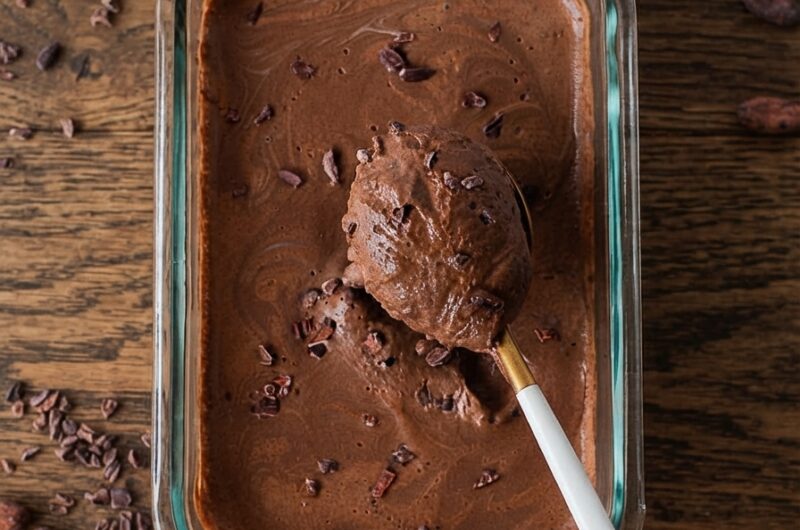
This pudding is a genuinely no-cook recipe — everything comes together with a whisk and some patience in the fridge. Almond milk and Greek yogurt form the creamy liquid base, while chia seeds, protein powder, and cocoa powder are combined dry before the liquid is stirred in. As the chia seeds hydrate over several hours, they thicken the mixture into a spoonable, tapioca-like pudding, while the Greek yogurt adds richness and the protein powder boosts both the chocolate flavor and the protein content.
An optional topping — a quick “cheesecake” swirl of melted dark chocolate stirred into Greek yogurt — can be spooned over the pudding partway through the process for extra richness. The entire active prep time is about 10 minutes; everything else is chilling time.
Understanding the Two Components
Before starting, it helps to separate the recipe into its two working parts:
1. The Pudding Base Almond milk and Greek yogurt are whisked together first. Separately, chia seeds, protein powder, and cocoa powder are combined dry in the storage container, and then the milk mixture is poured in and stirred well.
2. The Optional Chocolate-Yogurt Topping Melted dark chocolate is stirred into a small amount of Greek yogurt to create a creamy, tangy swirl that’s spooned over the pudding after its initial 10-minute rest.
Because the base needs a resting period partway through (to let the chia seeds begin absorbing liquid before a final whisk), this is a natural point to prepare the optional topping if you’re using it.
Kitchen Workflow: The Order That Actually Saves Time
Here’s the most efficient order to work through this recipe:
Step 1 — Whisk the milk and yogurt together. In a jar or bowl, whisk the almond milk and Greek yogurt together until combined. An immersion blender can be used here for an extra-smooth result.
Step 2 — Combine the dry ingredients in your storage container. In the container you’ll be storing the pudding in, mix together the protein powder, chia seeds, and cocoa powder.
Step 3 — Combine wet and dry. Slowly pour the milk mixture into the dry ingredients, stirring well to combine.
Step 4 — Let it rest, then re-whisk. Let the mixture sit for 10 minutes, then whisk once more. This second whisk is important — it keeps the chia seeds from clumping together as they begin to hydrate.
Step 5 — Add the optional topping, if using. While the mixture rests, melt the dark chocolate and stir it into 2 tablespoons of Greek yogurt. Spoon this mixture over the pudding after the 10-minute rest and second whisk.
Step 6 — Chill. Cover the container and refrigerate for at least 3 hours, though overnight gives the thickest, creamiest texture.
Using the 10-minute resting period to prepare the optional chocolate-yogurt topping means there’s no downtime in the process — by the time the base needs its second whisk, the topping is ready to add.
Component Organization: Setting Up Your Station
A simple setup keeps this recipe quick and mess-free:
- A jar or bowl — for whisking the almond milk and Greek yogurt together
- The storage container you’ll refrigerate the pudding in — used directly for combining the dry ingredients and pouring in the milk mixture, which saves an extra dish
- A small bowl — for the optional melted chocolate and Greek yogurt topping
- A whisk — for both the initial mixing and the important second whisk after the 10-minute rest
Mixing the dry ingredients directly in the container you’ll store and chill the pudding in (rather than a separate mixing bowl) cuts down on dishes and keeps the process efficient.
Step-by-Step Assembly Strategy
Assembly for this recipe is really about timing the rest period correctly:
- Whisk the almond milk and Greek yogurt together first, since this liquid base needs to be ready before it’s poured into the dry ingredients.
- Combine the protein powder, chia seeds, and cocoa powder directly in your storage container.
- Slowly pour in the milk mixture, stirring well so the dry ingredients are fully incorporated and no dry pockets remain.
- Let the mixture rest for 10 minutes — this gives the chia seeds a head start on absorbing liquid.
- Whisk once more after the rest to prevent the chia seeds from clumping together as they continue to hydrate.
- If using the optional topping, spoon the melted chocolate and Greek yogurt mixture over the pudding at this point.
- Cover and refrigerate for at least 3 hours, or overnight for the thickest, creamiest texture.
For a completely smooth, mousse-like texture rather than the classic tapioca-like chia texture, blend the base after the 10-minute rest before chilling — this is especially helpful for anyone who isn’t a fan of the texture of whole chia seeds.
Flavor Variations to Try
- Mocha: Add 1–2 teaspoons of instant espresso or a splash of strong coffee.
- Peanut butter cup: Whisk in 1 tablespoon of peanut butter or peanut butter powder, then top with chopped peanuts.
- Berry-chocolate: Fold in ¼ cup of raspberries or strawberries before chilling, and finish with extra berries on top.
- Mint chip: Add ⅛ teaspoon of peppermint extract and sprinkle cacao nibs on top.
- Salted caramel: Stir in 1–2 teaspoons of maple syrup and a pinch of flaky salt.
Approved Variations and Swaps
The following substitutions are drawn directly from the tested adjustments for this recipe:
For the almond milk:
- Oat milk, hemp milk, cashew milk, or any preferred milk can be used instead.
- For a richer, more dessert-like result, try canned full-fat coconut milk or coconut cream (using ⅓ to ½ cup plus a splash of water).
- Regular dairy milk also works.
For the Greek yogurt:
- A thick dairy-free yogurt, such as coconut or almond yogurt, can be substituted.
- If skipping the yogurt entirely, add ¼ to ⅓ cup extra milk along with a full scoop of protein powder to maintain a similar protein content.
- Blended cottage cheese is another suitable option.
For the chocolate protein powder:
- Whey, casein, or plant-based protein powders all work.
- If using an unflavored protein powder, add 1–2 teaspoons of maple syrup and ½ teaspoon of vanilla extract to compensate for the missing chocolate flavor and sweetness.
For the cocoa powder:
- Raw cacao powder can be substituted one-for-one.
For the chia seeds:
- If the texture of chia seeds isn’t appealing (particularly for kids), blend the base smooth, or use white chia seeds, before chilling for an instant mousse-like result.
Meal Prep and Storage Strategy
This pudding is designed to be made ahead and actually improves with time. A double batch can be prepared and stored in the fridge for up to 5 days.
The texture becomes noticeably thicker after 24 hours. If it becomes thicker than you’d like, simply stir in a splash of milk to loosen it back up.
Practical Notes for Best Results
- Whisk the mixture a second time after the 10-minute rest — skipping this step can lead to clumped chia seeds rather than an evenly thickened pudding.
- For the creamiest, thickest texture, chill overnight rather than the minimum 3 hours.
- If you prefer a smooth, mousse-like consistency instead of the classic chia texture, blend the base after the resting period and before chilling.
- Taste and adjust sweetness based on your protein powder, since some are pre-sweetened and others are not.
- If the pudding thickens too much after a few days in the fridge, stir in a splash of milk to bring it back to your preferred consistency.
Part 2: Straightforward Recipe Card
Creamy Chocolate Protein Chia Pudding
Description: A make-ahead breakfast that tastes like dessert — silky, spoonable chocolate chia pudding made with just 5 staple ingredients, delivering 35g of protein and 15g of fiber per serving.
Servings: 1
Duration:
- Prep: 10 minutes
- Cook: 0 minutes
- Chill Time: 3 hours (overnight recommended)
Ingredients:
For the pudding:
- 1/2 cup almond milk
- 1/2 cup plain Greek yogurt
- 1/2 scoop chocolate protein powder
- 3 tbsp chia seeds
- 1 tbsp cocoa powder
Optional topping:
- 2 tbsp plain Greek yogurt
- 1 tbsp dark chocolate chips, melted
Instructions:
- In a jar or bowl, whisk the almond milk and Greek yogurt. An immersion blender can be used for an extra-smooth result.
- In the container you’ll store your chia pudding in, mix together the protein powder, chia seeds, and cocoa powder. Slowly pour the milk mixture in, stirring well. Let the mixture sit for 10 minutes, then whisk once more to keep the chia from clumping.
- Optional: Melt the dark chocolate and stir it into 2 tbsp Greek yogurt. Spoon over the pudding after it’s sat for 10 minutes.
- Cover in an airtight container and refrigerate for at least 3 hours, but overnight for best results, to give it the thickest, creamiest pudding texture.
Notes:
- For a completely smooth, mousse-like texture, blend the base after the 10-minute rest, then chill. This helps if you aren’t a fan of the texture of chia pudding.
- Nutrition per serving: 413 kcal, 35g carbohydrates, 35g protein, 19g fat, 7g saturated fat, 9g polyunsaturated fat, 2g monounsaturated fat, 0.1g trans fat, 24mg cholesterol, 294mg sodium, 615mg potassium, 15g fiber, 10g sugar, 26IU vitamin A, 1mg vitamin C, 675mg calcium, 4mg iron. Nutrition information is automatically calculated and should be used only as an approximation.
Medical Disclaimer: The nutritional and dietary information provided in this document is for general informational and educational purposes only and is not intended as, and should not be substituted for, professional medical or nutritional advice, diagnosis, or treatment. Nutritional values are automatically calculated and are approximate; they may vary based on specific brands, ingredient substitutions, and portion sizes used. Individuals with food allergies, dietary restrictions, or medical conditions—including but not limited to dairy allergies, tree nut allergies, or conditions affected by high-fiber diets—should consult a qualified healthcare provider or registered dietitian before making changes to their diet. Reliance on any information provided in this document is solely at your own risk.