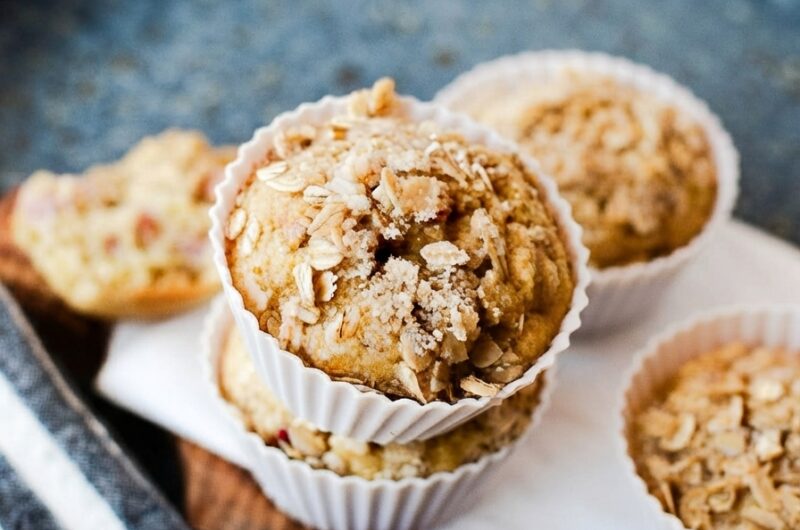
These Healthy Gluten-Free Oat Rhubarb Muffins with Streusel combine tart pieces of fresh rhubarb with a soft oat, almond, and coconut flour muffin base and a crisp cinnamon oat topping. The muffins have a tender center, lightly sweet flavor, and crunchy streusel finish, making them a delicious choice for breakfast, brunch, an afternoon snack, or a homemade baked treat.
Unlike many gluten-free muffin recipes that rely on a commercial all-purpose flour blend, these gluten-free rhubarb muffins use a combination of oat flour, almond flour, and coconut flour. No xanthan gum is required in the original recipe. The muffin batter is prepared in one large bowl, while the simple oat streusel comes together separately in a small bowl before being scattered over each muffin.
Why You Prefer These Gluten-Free Rhubarb Muffins
These muffins are an excellent way to use fresh rhubarb when it is in season. Rhubarb’s naturally tart flavor creates a pleasant contrast with the lightly sweet muffin batter and cinnamon streusel topping. Rather than producing an overly sweet bakery-style cake, the recipe balances fruitiness, nuttiness, sweetness, and warm cinnamon flavor in every bite.
Preparation is also refreshingly simple. The active prep time is approximately 10 minutes, and the muffins bake in about 22 to 24 minutes. There is no need to chill the batter, rest the dough, or prepare a complicated topping. Once the batter and streusel are ready, everything goes straight into the oven.
Naturally Gluten-Free Flour Combination
The flour base is one of the most distinctive features of this healthy rhubarb muffin recipe. Instead of using one gluten-free flour, it combines one cup of oat flour, one cup of almond flour, and six tablespoons of coconut flour. Each flour contributes something different to the texture of the muffins.
Oat flour provides a familiar baked-good texture and mild flavor, almond flour adds richness and tenderness, and highly absorbent coconut flour helps manage moisture. This combination creates enough structure for the muffins without requiring xanthan gum. If gluten avoidance is important, make sure the oat flour and rolled oats you purchase are specifically labeled or certified gluten-free.
Why Oat Flour Works Well in Muffins
Oat flour provides a mild flavor that pairs naturally with rhubarb, cinnamon, vanilla, and the nutty taste of almond flour. It is used in both the muffin batter and streusel, helping connect the flavors and textures of the two components.
The source also notes that homemade oat flour can be prepared by blending rolled oats. When preparing the recipe for a strict gluten-free diet, certified gluten-free oats should be used. A 1:1 gluten-free all-purpose blend can work as an alternative to oat flour according to the supplied variations, although the resulting muffin texture may be slightly different.
Almond Flour Adds a Tender Texture
One cup of almond flour works alongside the oat and coconut flours. Almond flour contributes richness because almonds naturally contain fat, which can help produce a softer and more tender crumb. Its mild nutty flavor also complements the oats and fresh rhubarb without overpowering them.
Because almond flour behaves differently from wheat flour or gluten-free all-purpose blends, it should not be casually exchanged for an equal amount of an unrelated flour. The source specifically identifies cashew flour as a 1:1 alternative. Sunflower seed flour can also be used 1:1 for a nut-free variation, although it may develop a harmless light-green color during baking.
Coconut Flour Helps Balance Moisture
Six tablespoons of coconut flour are included in the muffin batter. Coconut flour is exceptionally absorbent compared with oat or almond flour, which means a relatively small amount can absorb a significant amount of liquid. Accurate measurement is therefore particularly important for this ingredient.
Adding substantially more coconut flour could produce dry muffins, while using too little may leave the batter overly moist. The source specifically warns that coconut flour cannot simply be substituted 1:1 with other flours. This is why the original six-tablespoon quantity should be followed carefully when preparing the standard recipe.
Fresh Rhubarb Gives the Muffins Their Tart Flavor
One cup of fresh rhubarb, diced into small pieces, is folded through the muffin batter. Rhubarb has a naturally tart flavor, which works particularly well against the sweetness of natural cane sugar and the warm cinnamon streusel.
For the most even texture, the source recommends cutting rhubarb into approximately ¼-inch pieces. Pieces that are too large may remain firm, while extremely small pieces can lose too much structure. Small, evenly sized pieces distribute more consistently through the batter and are more likely to soften at the same rate during baking.
Can You Use Frozen Rhubarb?
Yes. The source allows frozen rhubarb when fresh rhubarb is unavailable. Keep the pieces small and add them directly from frozen rather than thawing them first. Thawing can release excess liquid, potentially affecting the consistency of the muffin batter.
The source also recommends tossing frozen rhubarb with one teaspoon of oat flour before folding it into the mixture. This can help manage additional moisture. This is an optional variation rather than part of the original standard ingredient list, so fresh rhubarb remains the ingredient used in the main recipe card.
Applesauce Keeps the Muffins Moist
Half a cup of unsweetened applesauce adds moisture to the muffin batter without introducing an overwhelming apple flavor. It works with the eggs, almond milk, and avocado oil to provide the liquid needed by the three-flour combination, particularly the absorbent coconut flour.
Using unsweetened applesauce is important to the original balance because the recipe already contains natural cane sugar. If sweetened applesauce is used as a variation, the source recommends reducing the sugar slightly. Mashed ripe banana or pumpkin purée can also replace applesauce at a 1:1 ratio according to the supplied recipe notes.
Eggs Provide Structure
Three eggs are whisked with the other wet ingredients at the beginning of the recipe. They contribute moisture and help bind the gluten-free flour mixture together as the muffins bake. The source recommends using room-temperature eggs because they incorporate more smoothly into the batter.
For an egg-free version, the supplied recipe allows three flax eggs, made with three tablespoons ground flax mixed with nine tablespoons water and rested for 10 minutes, or three chia eggs. The source notes that these alternatives may produce a slightly more tender muffin and could require a few additional minutes of baking.
Almond Milk Provides the Right Moisture
Three-quarters of a cup of almond milk provides additional moisture for the oat, almond, and coconut flour mixture. It is whisked together with the eggs, applesauce, avocado oil, and vanilla before any dry ingredients are introduced.
The recipe also allows oat milk, cashew milk, regular dairy milk, or another preferred milk. If using a sweetened milk, the supplied notes suggest reducing the sugar by one to two tablespoons. However, the standard recipe below retains the original three-quarters cup almond milk exactly as supplied.
Avocado Oil Adds Richness
Three tablespoons of avocado oil help keep the muffin crumb moist and tender. Avocado oil has a relatively neutral flavor, which makes it useful in a recipe where fresh rhubarb, vanilla, oats, and cinnamon should remain the dominant flavors.
The original recipe provides several optional alternatives, including melted coconut oil, light olive oil, melted butter, or ghee in equal quantities. These are useful variations for readers who do not keep avocado oil available, but they are not necessary for preparing the standard recipe.
Natural Cane Sugar Balances the Rhubarb
The muffin batter contains two-thirds cup of natural cane sugar, while another two tablespoons are used in the streusel topping. The sweetness is especially useful here because rhubarb is naturally tart. Rather than eliminating its tanginess, the sugar balances it so the distinctive rhubarb flavor remains noticeable.
The source permits coconut sugar or light brown sugar as 1:1 alternatives. It also states that the batter sugar can be reduced to half a cup for a less-sweet, more tart muffin. For this rewrite, however, the original ingredient quantities remain unchanged as requested.
A Crunchy Oat Cinnamon Streusel
The streusel is made separately from two tablespoons coconut oil, four tablespoons rolled oats, two tablespoons oat flour, half a tablespoon cinnamon, and two tablespoons natural cane sugar. These ingredients are mashed together until they form crumbly pieces rather than a smooth mixture.
Once sprinkled over the muffin batter, the streusel bakes into a lightly crunchy topping. This texture provides an appealing contrast with the soft muffin underneath. The cinnamon also adds warmth and complements both the rhubarb and oats, creating a more bakery-style finish without requiring frosting or glaze.
Why the Streusel Should Stay Crumbly
When preparing the streusel, avoid mixing until the ingredients become a uniform paste. The objective is to produce irregular crumbs that can be scattered over the individual muffins. These small clusters develop texture in the oven and create the recognizable crumb-topped appearance.
Mash the coconut oil into the rolled oats, oat flour, cinnamon, and sugar only until the mixture becomes clumpy. Distribute it evenly among all 12 muffin cups so every serving gets a similar amount of crunchy topping.
How to Prepare the Muffin Tin
Begin by preheating the oven to 350°F. Line a standard 12-cup muffin tin with paper or silicone liners before mixing the batter. Preparing the pan and heating the oven first allows the filled muffin tin to go directly into the oven once the streusel has been added.
A level ice-cream scoop is useful for dividing the batter evenly among the 12 cups. Equal portions not only make the finished muffins look more consistent but also help them bake at roughly the same rate.
Mixing the Wet Ingredients
In a large mixing bowl, combine three eggs, three-quarters cup almond milk, half a cup unsweetened applesauce, three tablespoons avocado oil, and two teaspoons vanilla extract. Whisk until the mixture appears smooth and evenly combined.
This creates the liquid foundation for the batter. Mixing the wet ingredients thoroughly before adding the flours makes it easier to incorporate the dry ingredients without prolonged stirring later. Since overmixing can negatively affect the muffin texture, it is useful to make the wet mixture as uniform as possible first.
Adding the Gluten-Free Flours
Add one cup oat flour, one cup almond flour, six tablespoons coconut flour, two-thirds cup natural cane sugar, two teaspoons baking powder, and half a teaspoon sea salt to the wet ingredients.
Stir only until there are no obvious dry pockets remaining. Do not continue beating the mixture after everything has been incorporated. The source specifically advises against overmixing because excessive stirring can make the final crumb less tender. Once the dry ingredients disappear into the batter, move immediately to adding the rhubarb.
Folding in the Rhubarb
Add one cup of finely diced fresh rhubarb to the prepared batter. Use a spatula or spoon to gently fold the pieces through the mixture until they are reasonably evenly distributed.
Avoid vigorous mixing at this stage. The goal is simply to distribute the rhubarb without unnecessarily working the batter. Because the pieces are small, they should spread easily throughout the mixture. This ensures each muffin contains some of the tart fruit rather than leaving most of the rhubarb concentrated in only a few portions.
Dividing the Muffin Batter
Divide the finished batter evenly among the 12 lined muffin cups. A level ice-cream scoop is particularly convenient because it allows you to portion similar amounts quickly without repeatedly estimating with a spoon.
Try to distribute both batter and rhubarb evenly. If you notice one cup has substantially more fruit than another, gently redistribute a few pieces before adding the streusel. Consistent portions help all 12 muffins finish baking at approximately the same time.
Adding the Streusel Topping
After filling the muffin cups, prepare the streusel in a small bowl. Mash together the coconut oil, rolled oats, oat flour, cinnamon, and natural cane sugar until crumbly.
Scatter the mixture evenly over all 12 muffins. Do not press the topping deeply into the batter; simply distribute the crumbs across the surface. During baking, the muffin batter will rise underneath while the streusel develops a slightly crisp texture across the top.
How Long to Bake Rhubarb Muffins
Bake the muffins at 350°F for 22–24 minutes. Look for tops that appear set and edges that have become lightly golden. Because ovens can vary, visual cues and the toothpick test are more useful than relying only on the clock.
Insert a toothpick into the center of a muffin. According to the supplied recipe, it should come out slightly moist but not wet and not completely dry. This distinction is important because baking until the toothpick is bone dry may result in a less tender muffin.
Cooling the Muffins Properly
Once baked, leave the muffins in the pan for approximately five minutes. This short resting period gives their structure time to settle, making them easier to remove without breaking.
After five minutes, transfer the muffins to a wire cooling rack. Allowing air to circulate around them helps prevent excess steam from becoming trapped underneath. The muffins can then be enjoyed after cooling to your preferred temperature or stored once they have cooled completely.
How to Store Gluten-Free Rhubarb Muffins
Allow the muffins to cool fully before placing them into an airtight container. According to the supplied recipe, they can be stored at room temperature for 1–2 days or refrigerated for up to 5 days.
Cooling before storage is important because warm muffins release steam. Trapping that moisture inside a sealed container can soften the streusel topping. If keeping the muffins longer than a day or two, refrigeration is the source’s recommended option.
Can You Freeze Rhubarb Muffins?
Yes. These gluten-free rhubarb muffins can be individually wrapped and frozen for up to three months. Individual wrapping makes it easier to remove only the number you need while keeping the rest frozen.
For serving, thaw a muffin overnight in the refrigerator. The source also allows reheating directly from frozen in a 300°F oven for 10–12 minutes. This makes the recipe particularly practical for batch baking when you want homemade muffins available for future breakfasts or snacks.
Fruit Variations for These Muffins
Although rhubarb provides the defining tart flavor, the supplied recipe also allows strawberries or raspberries when rhubarb is unavailable. Keep the fruit pieces small and fold them gently into the batter using the same technique as the standard recipe.
These substitutions can be useful outside rhubarb season, but they naturally change the flavor profile. For the standard oat rhubarb muffin recipe, fresh diced rhubarb remains the best choice because its distinctive tartness creates the intended contrast with the sweet cinnamon streusel.
Notes for Perfect Gluten-Free Rhubarb Muffins
Use room-temperature eggs, measure the coconut flour carefully, and cut the fresh rhubarb into small, even pieces. Once the dry ingredients are added, mix only until no flour pockets remain. Overworking the batter is unnecessary and can affect the finished texture.
When testing the muffins, look for a toothpick that is slightly moist rather than wet with raw batter or completely dry. Give the baked muffins their full five-minute rest in the pan before transferring them to a rack. These simple details help preserve their soft centers and crumbly streusel topping.
Are These Rhubarb Muffins Gluten-Free?
The recipe is built around oat flour, almond flour, and coconut flour rather than wheat flour. However, readers who must strictly avoid gluten should use certified gluten-free oat flour and rolled oats, since oats can be exposed to gluten-containing grains during growing or processing.
It is also sensible to check the labels of baking powder and other packaged ingredients according to individual dietary requirements. With suitable products, this recipe fits naturally into Gluten-Free Breakfast, Healthy Muffins, Gluten-Free Baking, and Rhubarb Recipes categories on a recipe website.
Why These Healthy Gluten-Free Rhubarb Muffins Work
For readers searching for gluten-free rhubarb muffins, healthy rhubarb muffins, oat flour muffins, gluten-free oat muffins, rhubarb streusel muffins, almond flour rhubarb muffins, healthy breakfast muffins, or easy gluten-free muffins, this recipe offers a flavorful combination of fruit, oats, and a crunchy cinnamon topping.
The recipe requires only about 10 minutes of preparation, while the oven handles most of the work. The combination of three gluten-free flours gives the muffins structure, applesauce and avocado oil contribute moisture, diced rhubarb brings tart freshness, and the oat-cinnamon streusel provides a contrasting crunch. The result is a practical homemade muffin that works equally well for breakfast, brunch, or snacking.
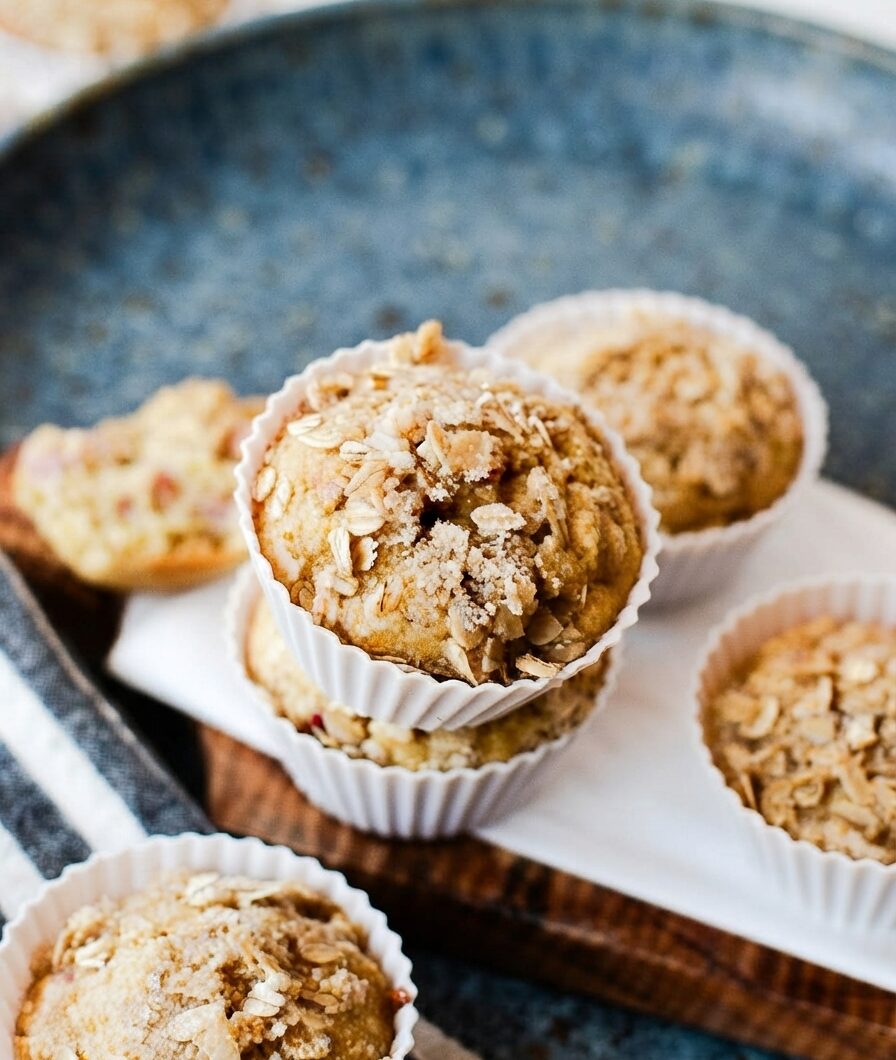
Healthy Gluten Free Oat Rhubarb Muffins with Streusel
Soft and lightly sweet gluten-free rhubarb muffins made with oat flour, almond flour, coconut flour, applesauce, and fresh diced rhubarb.
12
servings10
minutes22
minutes240
kcal32
minutesIngredients
- For the Rhubarb Muffins
3 eggs
¾ cup almond milk
½ cup unsweetened applesauce
3 tablespoons avocado oil
2 teaspoons vanilla extract
1 cup oat flour
1 cup almond flour
6 tablespoons coconut flour
⅔ cup natural cane sugar
2 teaspoons baking powder
½ teaspoon sea salt
1 cup fresh rhubarb, diced small
- For the Oat Streusel
2 tablespoons coconut oil
4 tablespoons rolled oats
2 tablespoons oat flour
½ tablespoon cinnamon
2 tablespoons natural cane sugar
Instructions
- Preheat the oven to 350°F.
- Line a 12-cup muffin tin with paper or silicone liners.
- Whisk eggs, almond milk, applesauce, avocado oil, and vanilla until smooth.
- Add oat flour, almond flour, coconut flour, sugar, baking powder, and salt.
- Stir briefly until no dry flour pockets remain.
- Gently fold the diced rhubarb into the batter.
- Divide the batter evenly among 12 muffin cups.
- In a small bowl, combine coconut oil, rolled oats, oat flour, cinnamon, and sugar.
- Mash until a crumbly streusel forms.
- Sprinkle the streusel evenly over each muffin.
- Bake for 22–24 minutes.
- Check that the tops are set and edges are lightly golden.
- Insert a toothpick; it should come out slightly moist but not wet.
- Cool the muffins in the pan for 5 minutes.
- Transfer to a wire rack and allow them to finish cooling.
Nutrition Facts
12 servings per container
- Amount Per ServingCalories240
- % Daily Value *
- Total Fat
13g
17%
- Protein 6g 12%
* The % Daily Value tells you how much a nutrient in a serving of food contributes to a daily diet. 2,000 calories a day is used for general nutrition advice.