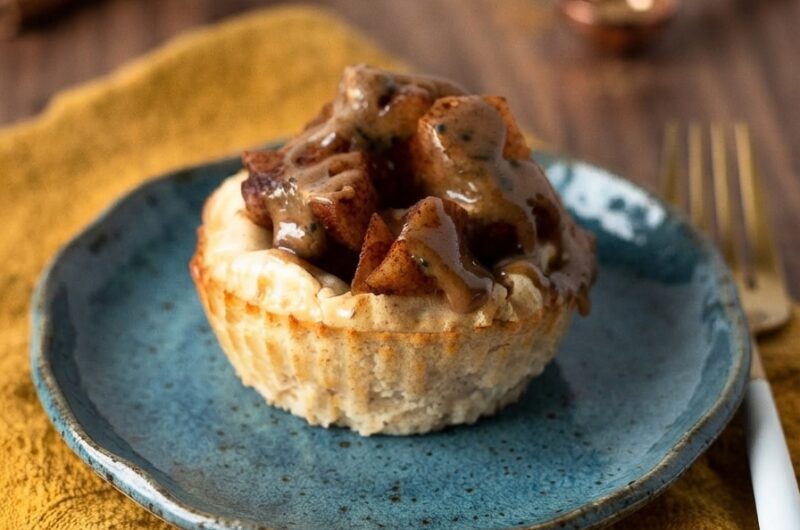
These mini apple pie cheesecakes combine two favorite fall flavors — apple pie and cheesecake — into a single, portioned bite that skips the heavy crust and traditional cream cheese base. Instead, the cheesecake filling is built on cottage cheese and Greek yogurt, blended smooth and boosted with protein powder, giving each mini cheesecake 9 grams of protein without sacrificing that classic creamy texture and flavor.
What makes this recipe well-suited for both entertaining and meal prep is the muffin tin format. Baking the cheesecakes in individual portions means no slicing, no crust to prepare separately, and a naturally built-in serving size. The process breaks down into three distinct components — the cheesecake base, the cinnamon apple topping, and the almond butter drizzle — each of which is prepared separately and then assembled at the end.
Below is a full breakdown of the workflow, ingredient roles, and technique needed to bring these three components together, along with the approved substitutions and storage guidance.
Kitchen Workflow: How the Process Is Organized
This recipe breaks into four stages: blending and baking the cheesecake base, cooking the cinnamon apple topping, preparing the almond butter drizzle, and assembling the finished cheesecakes.
Stage 1 — Blend and Bake the Cheesecake Base. The oven is preheated to 350 degrees Fahrenheit, and silicone muffin molds or a muffin pan with silicone liners are lightly oiled. Cottage cheese, egg, Greek yogurt, sugar, almond butter, vanilla, and protein powder all go into a blender together and are blended until completely smooth. This blending step is what replaces the need for a food processor or hand-mixing typically used in traditional cheesecake — it ensures the cottage cheese curds break down completely for a smooth, creamy texture. The batter is then poured into the muffin cups and baked for 35–40 minutes, until set in the middle, and allowed to cool fully to room temperature before any toppings are added.
Stage 2 — Cook the Cinnamon Apple Topping. While the cheesecakes bake or cool, diced apples are cooked in a skillet with cinnamon and water over medium heat. The apples are stirred often, with splashes of water added as needed to prevent sticking, until they soften and take on the aroma of classic apple pie filling. This slow, stovetop cooking method is what develops the soft texture and concentrated flavor associated with pie filling, without needing any added thickeners.
Stage 3 — Prepare the Almond Butter Drizzle. In a small bowl, almond butter, maple syrup, and melted coconut oil are stirred together until smooth and pourable, creating a nutty alternative to a traditional caramel sauce.
Stage 4 — Assemble. Once the cheesecakes have cooled completely, each one is topped with a spoonful of the cinnamon apple filling and finished with a drizzle of the almond butter sauce. Waiting until the cheesecakes have fully cooled before topping is important, since adding warm toppings to a still-warm cheesecake can cause the toppings to run off rather than sit neatly on top.
Component Breakdown
It’s useful to think of this recipe as three separate components that come together at the very end.
1. The Cheesecake Base — Cottage Cheese, Egg, Greek Yogurt, Sugar, Almond Butter, Vanilla, and Protein Powder This blended mixture replaces the cream cheese and sour cream found in traditional cheesecake. Cottage cheese and Greek yogurt provide the creamy texture and protein content, the egg binds everything together during baking, sugar provides just enough sweetness, and almond butter and vanilla round out the flavor. Protein powder is what boosts the overall nutritional profile without requiring extra sugar.
2. The Apple Pie Topping — Apples, Cinnamon, and Water This component is cooked separately on the stovetop rather than baked into the cheesecake itself, which keeps the apples distinct in texture and flavor from the creamy base below. Cinnamon brings the warm, cozy spice that’s essential to an apple pie flavor profile.
3. The Finishing Drizzle — Almond Butter, Maple Syrup, and Coconut Oil This mixture functions as a nutty alternative to caramel sauce. Melted coconut oil helps thin the almond butter and maple syrup into a pourable consistency that drizzles neatly over the finished cheesecakes.
Approved Variations and Swaps
Based strictly on the details provided, the following substitutions and adjustments can be made to this recipe:
- Cottage cheese and Greek yogurt are themselves substitutes for traditional cream cheese and sour cream, chosen here for their higher protein content. If preferred, cream cheese and sour cream can be swapped back in instead of cottage cheese and Greek yogurt.
- Protein powder can be swapped from vanilla to unflavored or cinnamon protein powder for a different flavor twist.
- Cane sugar can be replaced with coconut sugar, maple syrup, or honey.
- Nut butter (used in the drizzle) can be swapped for peanut butter or cashew butter for a different flavor direction.
- Apples can be swapped based on desired flavor — Granny Smith apples add tartness, while Honeycrisp apples bring more natural sweetness. Pears or peaches can also be used as a fruity variation on the topping.
Step-by-Step Assembly Strategy
To make a batch of these mini cheesecakes with clean, well-set results, follow this sequence:
- Preheat the oven to 350 degrees Fahrenheit and lightly oil silicone muffin molds or a muffin pan lined with silicone liners. This recipe makes 7 mini cheesecakes.
- Blend the cheesecake base ingredients together — cottage cheese, egg, Greek yogurt, sugar, almond butter, vanilla, and protein powder — until completely smooth, with no visible curds of cottage cheese remaining.
- Pour the batter evenly into the muffin cups, then bake for 35–40 minutes, until the centers are set rather than jiggly.
- Let the cheesecakes cool fully to room temperature before topping them. This step protects the texture of both the cheesecake and the toppings that go on top.
- Cook the diced apples with cinnamon and water in a skillet over medium heat, stirring often and adding small splashes of water as needed to prevent sticking, until the apples soften and smell like classic apple pie filling.
- Stir together the almond butter, maple syrup, and melted coconut oil in a small bowl until smooth and pourable.
- Top each cooled cheesecake with a spoonful of the apple filling, then finish with a drizzle of the almond butter sauce.
For the best texture when storing, keep the apple topping and almond butter drizzle separate from the cheesecakes until just before serving, so the cheesecakes stay firm and each component retains its own distinct texture.
Nutrition Benefits
Each component of this recipe contributes something specific nutritionally:
- Cottage cheese brings protein, calcium, and probiotics that support gut health.
- Greek yogurt adds extra protein and creaminess without relying on heavy cream.
- Protein powder provides a steady, filling boost, making these a reasonable post-workout option.
- Apples and cinnamon contribute fiber, antioxidants, and natural sweetness.
- Almond butter and coconut oil provide healthy fats that add to the overall satiety of the dessert.
Storage and Meal Prep
These mini cheesecakes store well, which makes them convenient for meal prep or make-ahead desserts. In the refrigerator, they can be kept in an airtight container for up to 5 days while staying fresh and creamy.
They also freeze well for longer storage: wrap each cheesecake individually in plastic wrap, place them into a freezer-safe bag or container, and they’ll keep for up to 2 months. To enjoy a frozen cheesecake, thaw it overnight in the fridge, and it will taste just as good as the day it was baked.
For the best texture, store the apple topping and almond butter drizzle separately from the cheesecakes until just before serving. This keeps the cheesecakes firm and ensures each component — the creamy filling, the warm spiced apples, and the nutty drizzle — retains its own distinct texture right up until you’re ready to eat.
Serving Ideas
These mini cheesecakes are delicious on their own, but can also be dressed up in several ways:
- Add a dollop of whipped cream, Greek yogurt, or chocolate cottage cheese pudding on top of the apple filling.
- Turn them into mini caramel apple cheesecakes with a generous caramel sauce drizzle.
- Sprinkle with crushed walnuts, pecans, or crushed graham crackers for added crunch.
- Pair with a cup of chai, hot cocoa, or coffee for a cozy afternoon snack.
- Add a scoop of vanilla ice cream on the side for an extra dessert-worthy presentation.
Part 2: Recipe Card
Mini Apple Pie Cottage Cheese Cheesecakes
Description: Cozy apple pie flavors meet creamy cheesecake in these bite-sized, protein-packed treats made with cottage cheese and Greek yogurt. Each mini cheesecake delivers 9 grams of protein.
Duration:
- Prep Time: 10 minutes
- Cook Time: 22 minutes
- Total Time: 32 minutes
- Servings: 7
Ingredients:
Cheesecake Base
- 1 cup cottage cheese
- 1 egg
- 1/4 cup plain Greek yogurt
- 2 tbsp natural cane sugar
- 1 tbsp almond butter
- 1 tsp vanilla extract
- 3/4 scoop vanilla protein powder
Cinnamon Apple Topping
- 2 apples, peeled, cored, and diced
- 2 tsp cinnamon
- 1/4 cup water, plus more for cooking
Almond Butter Drizzle
- 2 tbsp almond butter
- 1 tbsp maple syrup
- 1 tbsp coconut oil, melted
Instructions:
- Preheat the oven to 350 degrees F. Lightly oil silicone muffin molds or a muffin pan with silicone liners (this recipe makes 7 mini cheesecakes).
- Add the cottage cheese, egg, Greek yogurt, sugar, almond butter, vanilla, and protein powder to a blender. Blend until completely smooth.
- Pour the cheesecake batter into each muffin cup and bake for 35–40 minutes, until the cheesecakes are set in the middle. Let them cool fully to room temperature before topping.
- In a skillet, cook the diced apples with cinnamon and water over medium heat. Stir often, adding splashes of water as needed to prevent sticking, until the apples are softened and smell like apple pie filling.
- In a small bowl, stir together the almond butter, maple syrup, and melted coconut oil until smooth and pourable for the nutty caramel sauce alternative.
- Add a spoonful of the apple pie topping and finish with a drizzle of the almond butter sauce on top of each cheesecake.
Notes:
- Store the apple topping and almond butter drizzle separately from the cheesecakes until just before serving to preserve the best texture.
- Store cheesecakes in an airtight container in the fridge for up to 5 days.
- To freeze, wrap each cheesecake individually in plastic wrap and store in a freezer-safe bag or container for up to 2 months. Thaw overnight in the fridge before serving.
- For a flavor twist, swap vanilla protein powder for unflavored or cinnamon protein powder.
- Use Granny Smith apples for a tarter topping, or Honeycrisp for more natural sweetness.
- Nutrition (per cheesecake, approximate): Calories: 164kcal, Carbohydrates: 16g, Protein: 9g, Fat: 8g, Saturated Fat: 3g, Cholesterol: 35mg, Sodium: 116mg, Potassium: 181mg, Fiber: 2g, Sugar: 12g, Vitamin A: 106IU, Vitamin C: 2mg, Calcium: 89mg, Iron: 0.5mg.
Medical and Nutritional Disclaimer
The information provided in this recipe and guide is intended for general informational and educational purposes only and does not constitute medical, dietary, or nutritional advice. Nutritional values listed are automatically calculated estimates and should be used as an approximation only; actual values may vary based on specific ingredient brands, substitutions, and portion sizes used. This recipe is not intended to diagnose, treat, cure, or prevent any disease or health condition. Individuals with food allergies, dietary restrictions, or specific medical conditions should consult with a qualified healthcare provider or registered dietitian before making dietary changes or preparing this recipe. The author and publisher assume no responsibility for any adverse effects resulting from the use or application of the information contained herein.